Confined White on Youth, Resilience, and the Stories We’re Afraid to Tell
By. Alicia Zamora
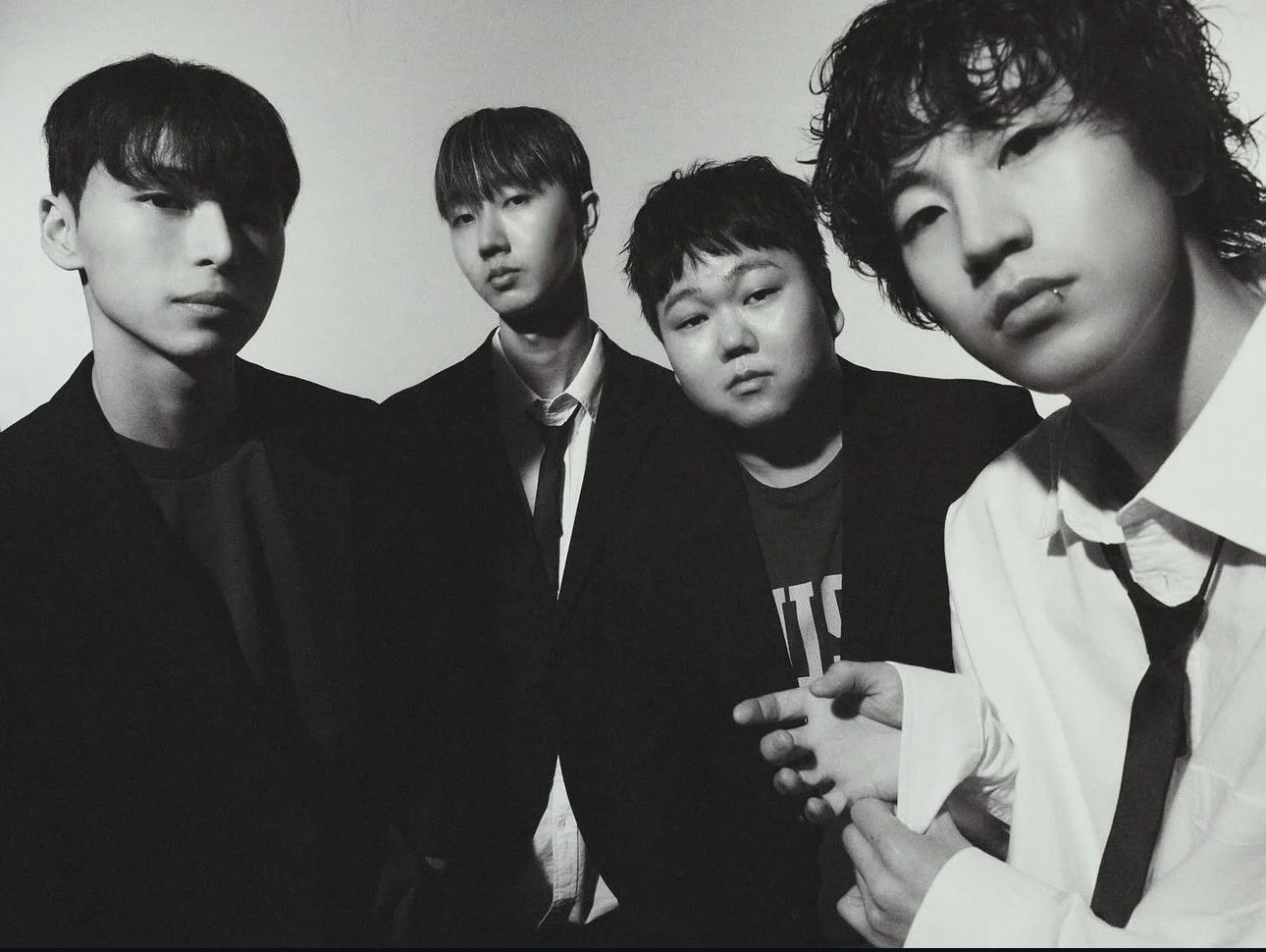
Confined White Is Turning Silence Into Something Heard
In an exclusive interview for Alicia’s Studio, Confined White doesn’t present themselves as a band chasing spectacle. Instead, they position their music as something quieter—but heavier. Built around the stories young people often feel forced to hide, their work exists in that tension between who you are and who you’re expected to be.
“We are the band ‘Confined White,’ singing the pure stories that youth have had to hide,” they explain.
It’s a mission that feels less like branding and more like a responsibility—one that shapes not only what they say, but how they say it.
Comprised of Hwang Jae Min (drums), Moon Dae Myeong (guitar), Kim Tae Beom (bass), and Sung Hyuk (vocals, guitar, and primary songwriter), the group operates as a fully collaborative unit, with each member contributing to arrangement and overall direction. But even within that structure, there’s a clear emotional center: storytelling rooted in lived experience.
Confined White’s origin story isn’t built on industry connections or sudden opportunity—it starts with a promise.
Two members, Sung Hyuk and Kim Tae Beom, were high school classmates who shared a simple idea: start a band when they grew up. Life interrupted that plan for a while, pulling them in different directions. But the idea never fully disappeared.
Years later, that same idea resurfaced—strong enough to act on.

“We didn’t want that dream to just stay a dream,” they say.
Rather than letting it stay hypothetical, Sung Hyuk reached out again. Within days, the foundation for Confined White began to take shape, eventually expanding into a full band through connections made in Incheon.
That urgency—the decision to act instead of wait—still defines how they move.
Learning in Real Time: Building Without a Blueprint
Starting out, the band didn’t have the technical background or experience you might expect. In fact, that lack of knowledge became one of their biggest challenges early on.
They weren’t just trying to make music—they were trying to learn how to make music at all.
Sung Hyuk, now the band’s primary songwriter and producer, describes a period of intense self-doubt and frustration. He struggled to keep up with conversations, often needing to go home and research basic music terminology just to stay aligned with the group.
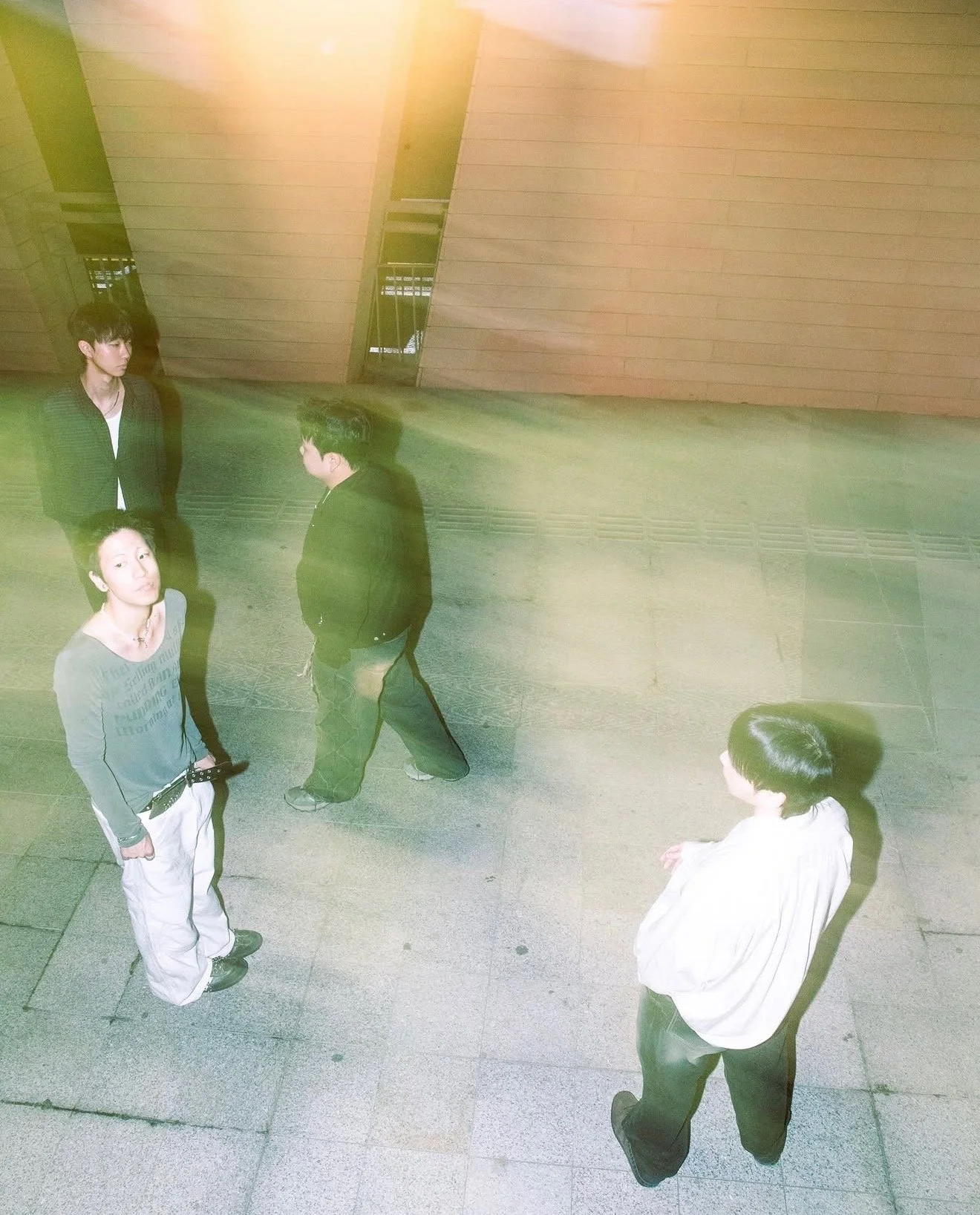
“I didn’t want to be a burden to the members,” he reflects. “So I started studying composition seriously.”
That turning point reshaped his role in the band. What started as insecurity eventually became motivation, pushing him to develop the skills that now define their sound.
Their release “HOME / I’ll Be Right Back” captures one of the band’s most personal themes: the tension between expectation and self-direction.
At its core, the project reflects on childhood—on the version of yourself that hesitates, conforms, and avoids conflict. But instead of staying there, the music becomes a declaration of change.
“We wanted to say, ‘Now I’ll live chasing my own dream, not someone else’s expectations,’” they explain.
It’s about choosing your own path, even when it means stepping away from what’s familiar.
The band frames it almost like a promise: to return not as who others expected them to be, but as who they chose to become.
For Confined White, songwriting always begins with narrative. Before chords or structure are finalized, there’s a focus on what the song is trying to say—and why it matters.
Sung Hyuk often starts by documenting ideas through voice notes or written fragments, building out a kind of emotional storyboard before the music fully takes shape.
“When I write a song, the most important thing is the narrative—making it immersive and real,” he says.
From there, the process becomes collaborative.
Each member adds their own layer—instrumentation, feedback, arrangement—transforming an initial idea into something more dimensional. The band moves fluidly between individual contribution and collective refinement, allowing songs to evolve naturally rather than forcing a fixed structure.
Letting Go of Control: Music as Interpretation
One of the more striking ideas that emerges from the conversation is how Confined White thinks about meaning.
Rather than insisting on a single interpretation, they actively want listeners to reshape their songs.
“We want people to interpret our music in their own way,” they explain. “That’s when it expands.”
It’s a perspective that shifts the role of the audience—from passive listener to active participant. The song doesn’t end when it’s released; it changes depending on who hears it.
That openness is intentional. Their lyrics often leave space—gaps where listeners can project their own experiences, emotions, and memories.
Even as a relatively small band, Confined White doesn’t frame their current position as limitation. If anything, it gives them room to focus on what matters most: the work itself.
“There’s more excitement than pressure,” they admit.
That mindset carries into their future plans. They speak about releasing singles consistently, preparing for a solo show, and building toward a larger EP—steps that feel steady rather than rushed.
At the same time, their ambitions remain expansive. From performing at festivals to experimenting with orchestral collaborations, they’re not interested in staying in one lane.
They’re interested in growth.
Confined White Is Still Writing Their Story
What makes Confined White compelling isn’t just their sound—it’s the intention behind it. Their music isn’t designed to impress instantly or follow a formula. It’s built slowly, shaped by experience, and grounded in honesty.
At its core, their goal is simple, but not easy:
“We hope our music inspires you to think about how to love yourself.”
It’s a message that doesn’t arrive loudly. It sits with you, unfolds over time, and lingers in the spaces where words usually fall short.
Because for Confined White, music isn’t just expression.
It’s understanding—both of themselves, and of the people still trying to figure things out alongside them.