Blish on Instinct, Identity, and Building Worlds Through Sound
By. Alicia Zamora
Blish Is Learning to Trust What Comes Out First
During an exclusive interview conducted by Alicia’s Studio, I had the privilege of sitting down with the incredibly talented artist and producer Blish. The conversation moved fluidly between beginnings and becoming—touching on the emotional and creative foundations behind his music, and how instinct has quietly replaced uncertainty as his main creative compass.
What emerges early on is not a neatly packaged origin story, but something more internal. Blish speaks less about chasing music and more about arriving at it—almost accidentally—after a period of uncertainty about identity and direction.
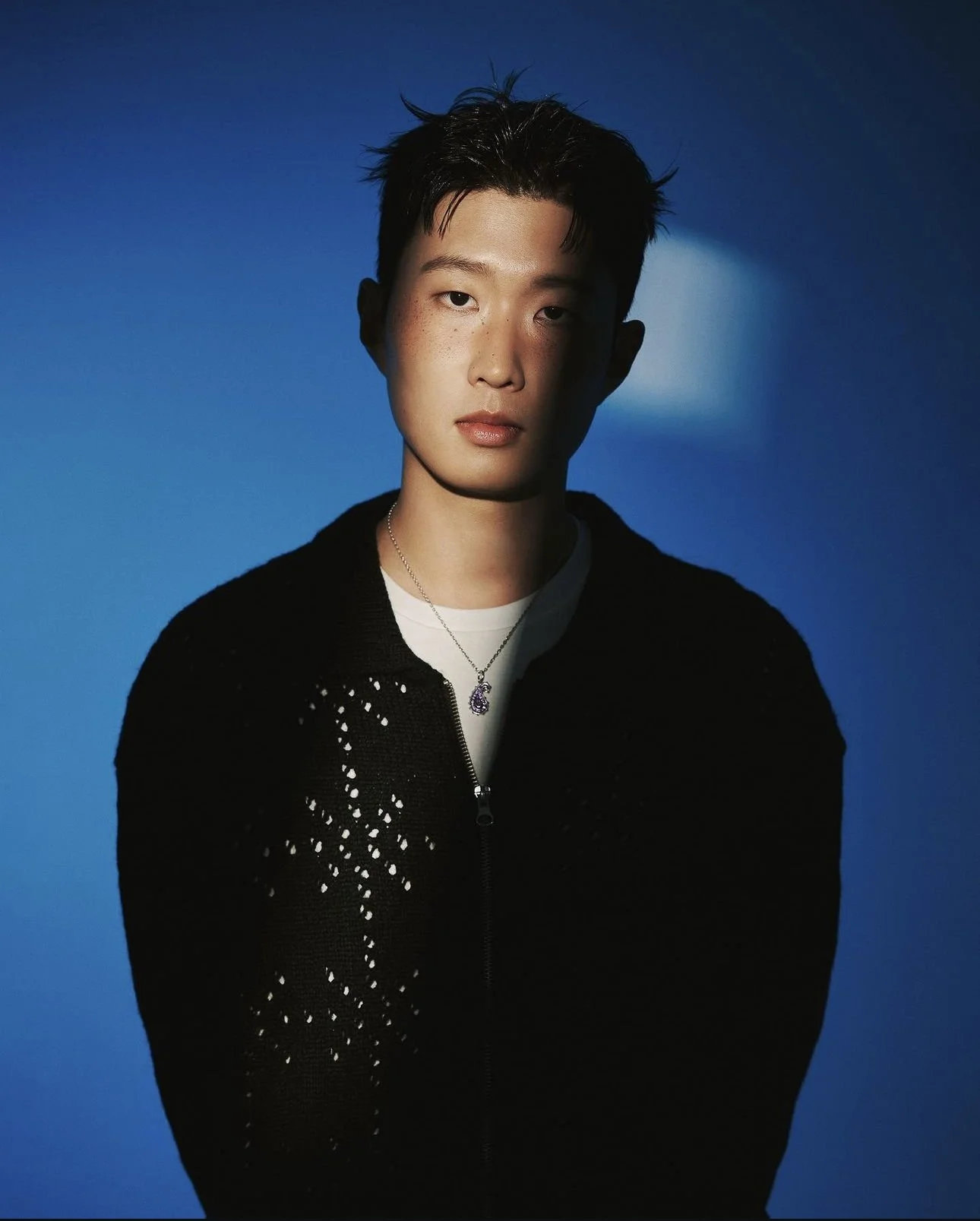
“I realized I didn’t want my life to feel empty like that,” he shares. “That’s when I started making music.”
From that point, music becomes less of a choice and more of a necessity—something that gives shape to what he couldn’t otherwise articulate.
Blish traces a key turning point to studying abroad, where he encountered artists like Akon and T-Pain for the first time. Coming from a background rooted primarily in Korean music, the experience was disorienting in the best way—expanding what he thought music could sound and feel like.
“I was shocked,” he says. “And I just wanted to make something like that.”
That moment becomes a kind of quiet ignition point—not just stylistically, but emotionally. It introduces the idea that music could exist outside of familiarity, outside of rules he had assumed were fixed.
“Wanderland” and the Idea of Arriving After Being Lost
His most recent release, “Wanderland,” reflects a different kind of emotional terrain. The track is framed not around arrival, but the feeling of finally stopping after a long period of drifting.
“This song portrays someone who has been wandering but has finally found their own utopia,” he explains. “It’s a reflection of my past self.”
That framing is important. Rather than treating the track as a triumph, Blish positions it as a snapshot of transition—an acknowledgment of what it took to get to a place that still feels slightly unstable, but more intentional.
The production mirrors that sensibility: fluid, instinct-driven, and shaped more by feeling than formula.
“I just follow my instincts,” he says. “That’s usually where it starts.”
Across the interview, Blish repeatedly returns to instinct as both method and philosophy. His creative process resists structure in favor of responsiveness—starting with a drum pattern, a loop, or a melodic idea, and allowing the track to form itself over time.
There is no fixed ritual, no rigid system guiding the work.
“I just listen to new music every day,” he says simply.
That openness becomes part of the work itself. Instead of forcing direction, he allows influence and emotion to accumulate naturally, trusting that something cohesive will emerge from repetition and exposure.

Pressure, Doubt, and the Decision to Expand
Even as his sound becomes more defined, Blish acknowledges moments of hesitation—particularly when stepping beyond production into vocals. The shift required him to confront doubt not as an obstacle, but as part of the process.
“I did wonder if I could do it well,” he admits.
Rather than framing it as a dramatic turning point, he describes it as a quiet expansion—another layer added to his artistic identity rather than a reinvention of it.
That willingness to evolve without abandoning his core approach becomes a defining thread in how he talks about growth.
When asked about achievements, Blish doesn’t point to abstract recognition, but to specific milestones tied directly to creation. Releasing his first produced track and debut full-length album, “Wanderland,” stand out not as endpoints, but as markers of consistency.
Still, even these moments are framed less as arrival and more as continuation.
There is no sense that the work is finished—only that it is progressing.
Blish’s relationship with music is deeply tied to emotional translation. When language falls short, sound takes over—not to explain, but to approximate feeling.
“I express what’s hard to say through lyrics or sound,” he explains.
That philosophy extends into how he thinks about audience perception as well. Rather than aiming for a fixed identity, he hopes listeners experience variety and unpredictability in his work.
“I want them to feel curious about what comes next,” he says.
Not clarity, but anticipation.
Future plans include his second full-length album, currently in progress, alongside long-term aspirations of performing in the U.S. and U.K. But even these goals are not framed as endpoints. Instead, they exist as extensions of the same instinct-driven process that has defined his work so far.
He also expresses a desire to collaborate more deeply and give back to those who have supported his journey—suggesting that connection, not just output, is becoming increasingly central to his practice.
Blish Is Still Learning What He Sounds Like
What stands out most in conversation with Blish is not certainty, but responsiveness. His work doesn’t try to lock itself into a single identity or aesthetic—it shifts, adapts, and re-forms based on feeling rather than expectation.
Even his own perception of success is fluid, grounded less in recognition and more in progression.
And if “Wanderland” captures anything, it’s not the idea of having arrived somewhere fixed—but of recognizing that movement itself can become a place to exist.
Because for Blish, music isn’t about defining who he is too quickly.
It’s about staying close enough to instinct that the answer doesn’t need to be forced.