Thomas Ng on Movement, Reinvention, and Breaking Out of His Own Sound
By. Alicia Zamora
In this conversation for Alicia’s Studio, R&B artist and songwriter Thomas Ng reflects on his path from early dance training to shaping a genre-blurring catalog that sits between groove-driven R&B, pop sensibilities, and emotionally reflective songwriting. Known for releases like Too Close featuring Oceanfromtheblue, Thomas speaks less like someone defining a fixed identity and more like someone actively reshaping it in real time.
What emerges is an artist in transition—returning to independence, rethinking structure, and slowly loosening the self-imposed limits around what his music is “supposed” to sound like. Rather than presenting a clear narrative of arrival, Thomas frames this period as one of rebuilding: creatively, professionally, and personally.
There’s a consistent tension in how he speaks about his work—between instinct and discipline, movement and introspection. Music, for him, is no longer just a product of inspiration, but something that has to survive experimentation, rejection, and constant reinvention.
What follows is a conversation about rhythm, identity, and what happens when an artist decides to stop fitting neatly into a version of themselves they outgrew.
From Movement to Music
Thomas’s entry into music didn’t begin with singing—it began with motion. Raised on a steady diet of performance culture shaped by his mother’s influence and a childhood fascination with Michael Jackson, he first trained as a dancer before anything else.
He recalls early exposure to tap dancing and structured performance from the age of four, but says the connection to music itself came gradually, almost indirectly.
“It started with dancing,” he explains, “but then I realized music made me feel something different. Like I could actually release something.”
At first, singing wasn’t even something he wanted to pursue. He describes actively resisting it as a child, only later returning to it through formal training and parental encouragement. Over time, what once felt unfamiliar became the center of his creative identity.
By fifteen, he began taking music seriously—not as an abstract interest, but as something he could actively build.
His recent collaboration Too Close with Oceanfromtheblue sits in that in-between space Thomas often returns to—emotionally direct but conceptually open-ended.
The track came together quickly, shaped by a remote collaboration process that relied heavily on intuition rather than over-direction. A mutual connection passed the record along, and the feature came back with minimal friction.
“It was all really smooth,” he says. “I just trusted the vibe and let him do his thing.”
The song itself explores emotional hesitation—the push and pull of wanting closeness while resisting vulnerability. Thomas describes it as less of a narrative and more of a feeling state: the moment when attachment becomes uncertain rather than comforting.
Even in its creation, speed played a role. The foundation of the song was built in a single night session, where melody and structure came first, followed by refinement in later stages.
That immediacy, he suggests, is something he’s trying to preserve more often in his work.
A turning point in Thomas’s recent perspective came while attending Head In The Clouds, where he saw Zion.T perform live. The experience reshaped how he thought about performance energy and audience connection.
“It was super hot, nobody really wanted to move,” he says. “But once he came out, everything changed. People just started dancing.”
That moment became a reference point—not just for stage presence, but for what he wants his music to do physically in a room.
Previously associated with more emotionally heavy or melancholic tones, Thomas now finds himself drawn toward more rhythmic, groove-oriented production. Not as a rejection of his earlier work, but as an expansion of it.
“I don’t want to make people cry at shows anymore,” he says. “I want them to move.”
Still, he resists the idea of committing to a single direction. For him, evolution isn’t about replacing one version of himself with another—it’s about keeping space open for both.
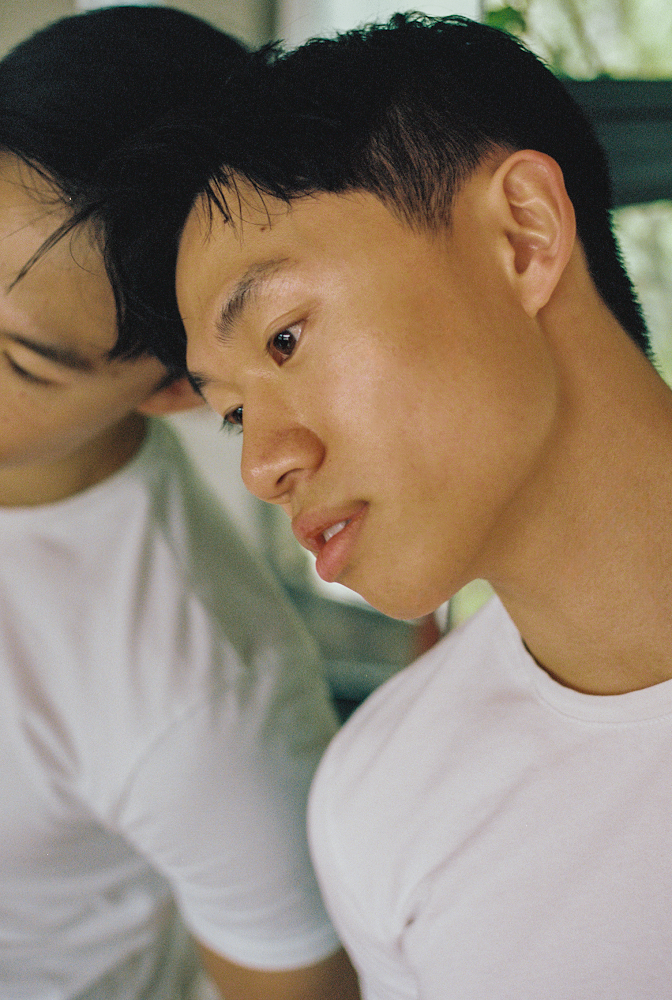
Now back to being independent after a year with Warner, Thomas describes this phase as both liberating and demanding.
“There’s a lot more freedom,” he says, “but also a lot more responsibility.”
Without label structure, the process of making and releasing music becomes more self-driven—requiring not only creative output but also logistical awareness around rollout, performance, and consistency.
He compares it to starting over, but not from zero—more like rebuilding something with materials he already understands better now.
Despite the challenges, he emphasizes the value of creative control. The ability to shape how music is released, performed, and developed has become central to his current workflow.
One of the recurring ideas in Thomas’s perspective is resistance to categorization. As his sound has shifted—from softer, heartbreak-driven tracks to more rhythmic R&B—he’s become increasingly aware of how easily artists get defined too early.
“There’s this idea of ‘sound’ that boxes people in,” he explains. “Once you define it too strictly, it becomes harder to move.”
Instead, he sees his work as something fluid—less about maintaining consistency and more about allowing change without explanation.
That philosophy extends to how he wants to be perceived as an artist as well. Not as a fixed reference point or comparison, but as a presence defined in real time.
“Just Thomas,” he says simply.
With new music on the way, a summer-leaning single in development, and live performances including his June 8th LA show, Thomas is currently focused on rebuilding momentum through consistency and experimentation.
He’s rehearsing with his team, refining a more performance-driven set, and continuing to test where his sound naturally settles when it’s not being forced into a single lane.
“I just want to keep making things,” he says. “And see where it goes.”
For now, that seems to be the only direction that fully holds.