Ineffa Lucas on Storytelling, Emotional Distance, and Building an Identity Through Music
By. Alicia Zamora
Meet Ineffa Lucas in this exclusive interview for Alicia’s Studio, where the conversation moves from childhood piano lessons in a musical household to cinematic songwriting, creative uncertainty, and his upcoming full-length album Wotecomb.
What begins as a reflection on early exposure to music quickly expands into something more layered—how influence becomes identity, and how storytelling can sometimes feel clearer than lived experience itself.
He introduces himself with a calm ease, almost understated.
“Hello, my name is Ineffa Lucas… I’m a musician living in New Zealand,” he says with a laugh.
Ineffa describes growing up in a deeply musical environment, where music wasn’t something discovered later in life—it was present from the beginning. With a mother who taught piano, his introduction to music came early and naturally.
“I have been playing the piano since I was three or four,” he shares.
Despite that early foundation, he didn’t immediately see music as a career path. For a long time, it remained something close but undefined—something practiced, but not fully claimed.
It wasn’t until the end of high school that things shifted. He began writing his own lyrics and shaping his own stories, moving from interpretation into authorship.
That transition from playing music to creating it became the turning point. Instead of performing existing works, he began building his own emotional and narrative world.
What started as a hobby slowly became something more intentional, even if the direction wasn’t fully clear yet.
“It started as a hobby but it became a full-time thing,” he reflects.
There’s a sense that the decision wasn’t sudden, but gradual—something that formed through repetition rather than a single defining moment.
Crybaby: Collaboration and Emotional Construction
His release Crybaby, featuring Jimmy Brown, becomes a central point of discussion. The track is not autobiographical, but instead built from imagined narrative—a story constructed rather than lived.
Working with Jimmy Brown played a significant role in shaping the final result. He describes the collaboration as structured but supportive, with consistent feedback throughout the creative process.
“He’s amazing… he was always giving very useful feedback to me,” he says.
That dynamic helped refine not only the track’s structure, but also its emotional clarity.
Unlike many artists who draw primarily from personal relationships, Ineffa often builds songs from imagined scenarios. Crybaby in particular exists as a constructed emotional story rather than a lived one.
The song centers on departure, love, and emotional reassurance—told through characters rather than autobiography.
This approach creates distance between artist and narrative, allowing him to explore emotion without directly inhabiting it.
At the same time, that distance introduces its own challenge: translating emotion that isn’t personally experienced into something believable.
A defining part of Ineffa’s songwriting process is his reliance on film as inspiration. Rather than pulling from other music or literature, he often builds ideas from cinematic storytelling.
He describes watching movies as a way to understand emotional structure, character motivation, and narrative pacing.
From there, he constructs lyrical ideas based on imagined scenes rather than direct experience.
This method allows his music to function almost like short narrative fragments—emotionally driven, but visually informed.
Sonically, Ineffa operates within a space that blends R&B and pop, with growing interest in rock influences. That hybrid direction reflects both personal taste and ongoing experimentation.
He doesn’t define his work through strict genre boundaries, but instead through mood and identity exploration.
Rock influences, in particular, represent a newer direction—something he is still actively exploring as part of his evolving sound.
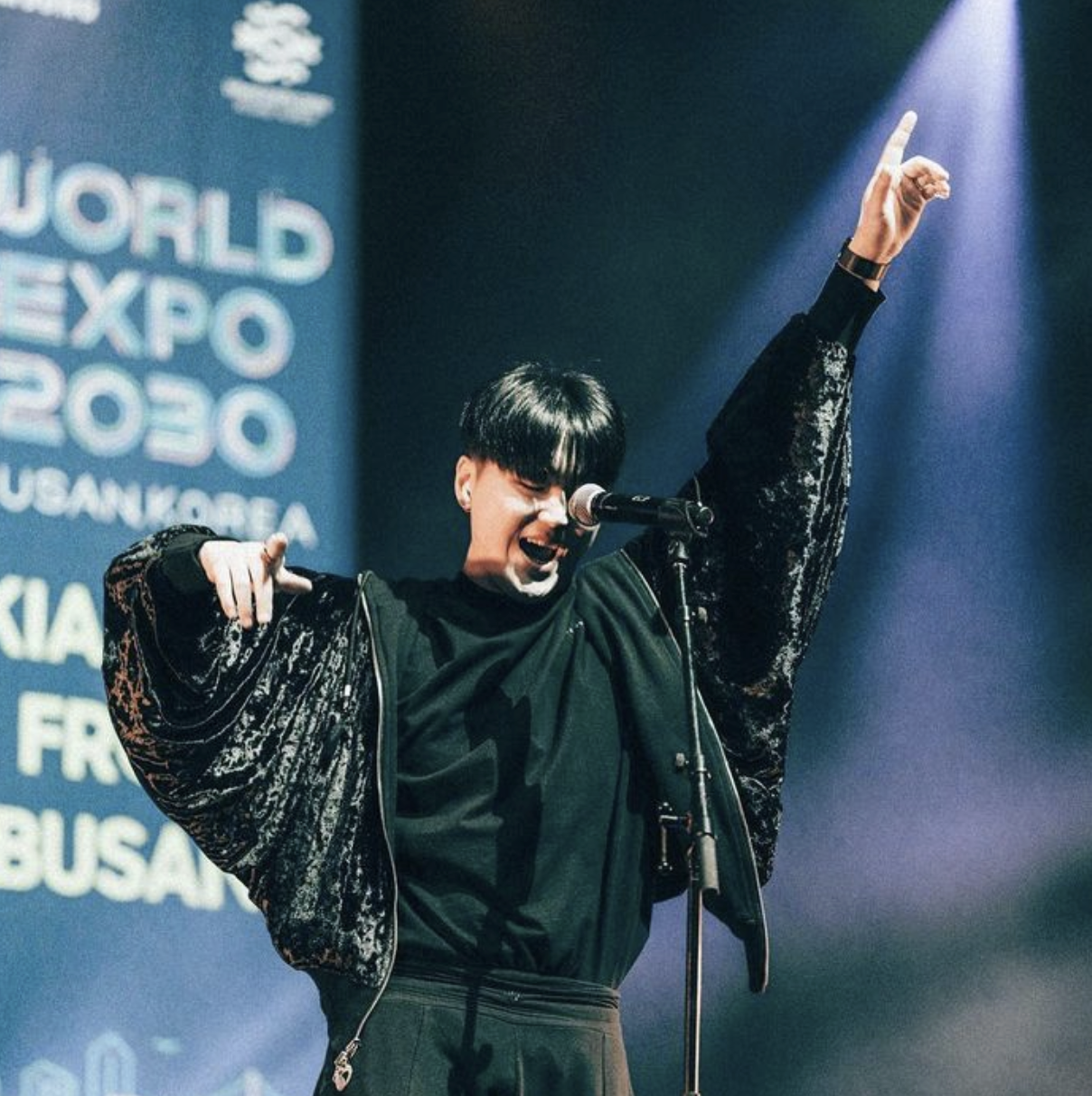
Ineffa cites several key influences that have shaped his artistic direction. One of the most significant is DPR Ian, whose visual storytelling and emotional intensity resonate strongly with his own creative interests.
He also references Post Malone, appreciating the emotional accessibility and genre-blending approach in his music.
Beyond Western influences, he also draws inspiration from Korean artists such as Beenzino, whom he describes as a dream collaborator.
These influences reflect a balance between global sound exploration and cultural grounding.
As his music continues to grow, Ineffa reflects on identity as one of the most important but still unresolved aspects of his career.
Rather than defining what he wants people to think of him immediately, he focuses on building a consistent artistic presence over time.
There is an awareness that identity in music is not static—it develops through repetition, recognition, and evolution.
He describes this process as something still unfolding rather than already established.
While English remains his primary creative language, Ineffa expresses interest in incorporating Korean more intentionally into future work. That balance between languages reflects both comfort and cultural connection.
He also expresses openness to collaboration, particularly within the Korean music scene, while acknowledging that his sound often leans more comfortably into English expression.
There’s a clear intention to bridge both spaces over time, rather than choosing one over the other.
Wotecomb: Memory, Time, and Emotional Interpretation
His upcoming album Wotecomb, releasing May 23, becomes the emotional anchor of the conversation.
The title stands for “Will the time ever come back”—a concept centered on memory, reflection, and emotional return.
Rather than prescribing meaning, Ineffa intends for listeners to interpret the project through their own experiences—relationships, friendships, loss, and personal history.
“I just want everyone to listen to it from start to finish and see what they get from it,” he explains.
The project includes multiple features and accompanying music videos, marking one of his most developed releases to date.
As the interview comes to a close, Ineffa reflects on the upcoming release with quiet anticipation. There’s no urgency in his tone—just a steady focus on completion and sharing.
What defines his work is not immediate recognition, but long-form construction: building identity, emotion, and narrative step by step.
With Wotecomb, he continues shaping a space where storytelling and sound intersect—where music becomes less about certainty, and more about interpretation.