The Tulips on Timing, Tenderness, and Learning to Grow in Public
By. Alicia Zamora
“At the End of the Day, We’re Just Two Girls With Two Jobs”
Meet The Tulips not at a moment of arrival, but somewhere in the middle of becoming.
In conversation with Alicia’s Studio, Julia and Andrea do not present themselves as a fully formed act with a fixed identity or polished narrative. If anything, they resist that idea entirely. What they offer instead is something less controlled and more honest. A version of artistry that exists in real time, unfinished, emotional, and constantly shifting.
Their origin story is not dramatic. It is familiar in a way that feels almost accidental.
“We’ve always known each other,” Julia explains, “but we never really talked until after college.” It was later, through social media and shared experiences, that their connection actually began to take shape. They describe it half jokingly as “trauma bonding,” but there is truth sitting underneath the humor.
A Lizzy McAlpine concert became the turning point. “That was the first time we hung out,” Julia says. “Since then, we’ve been besties ever since.”
There is something telling in how casually they frame it. No grand realization, no carefully planned decision to start a band. Just timing, proximity, and the quiet recognition of seeing yourself reflected in someone else.
Before The Tulips, both were making music on their own. Collaboration did not come from strategy. It came from ease.
“We were like, why don’t we just put out music together?” Julia recalls. “It was just so fun.”
That sense of effortlessness still defines them, even as everything around them gets more complicated.
The Tulips exist alongside everything else. Work shifts, school schedules, responsibilities that do not pause just because there is a song to finish.
“At the end of the day, we’re just two girls with two jobs,” Julia says. It is not self deprecating. It is clarifying.
For now, music is not their full time reality. It is something they build around everything else.
That reality shapes their biggest challenge. Not creative differences or lack of ideas, but time.
“Scheduling,” Andrea says. “That’s literally it.”
She laughs, but the weight of it lingers. Between school and work, even finding time to be in the same room can be difficult. Their process adapts. It stretches across days, sometimes weeks.
“Sometimes we have weeks where we can’t really Tulip,” Julia says, using their word for making music together.
Still, they find ways to keep things moving. Voice memos replace presence. Ideas are recorded in cars, sent back and forth, slowly pieced together.
“Voice memo is our bestie,” Andrea says. “It helps so much.”
What could feel like a limitation becomes part of their rhythm. Their music is not made in perfect conditions. It is made in whatever space they can find.
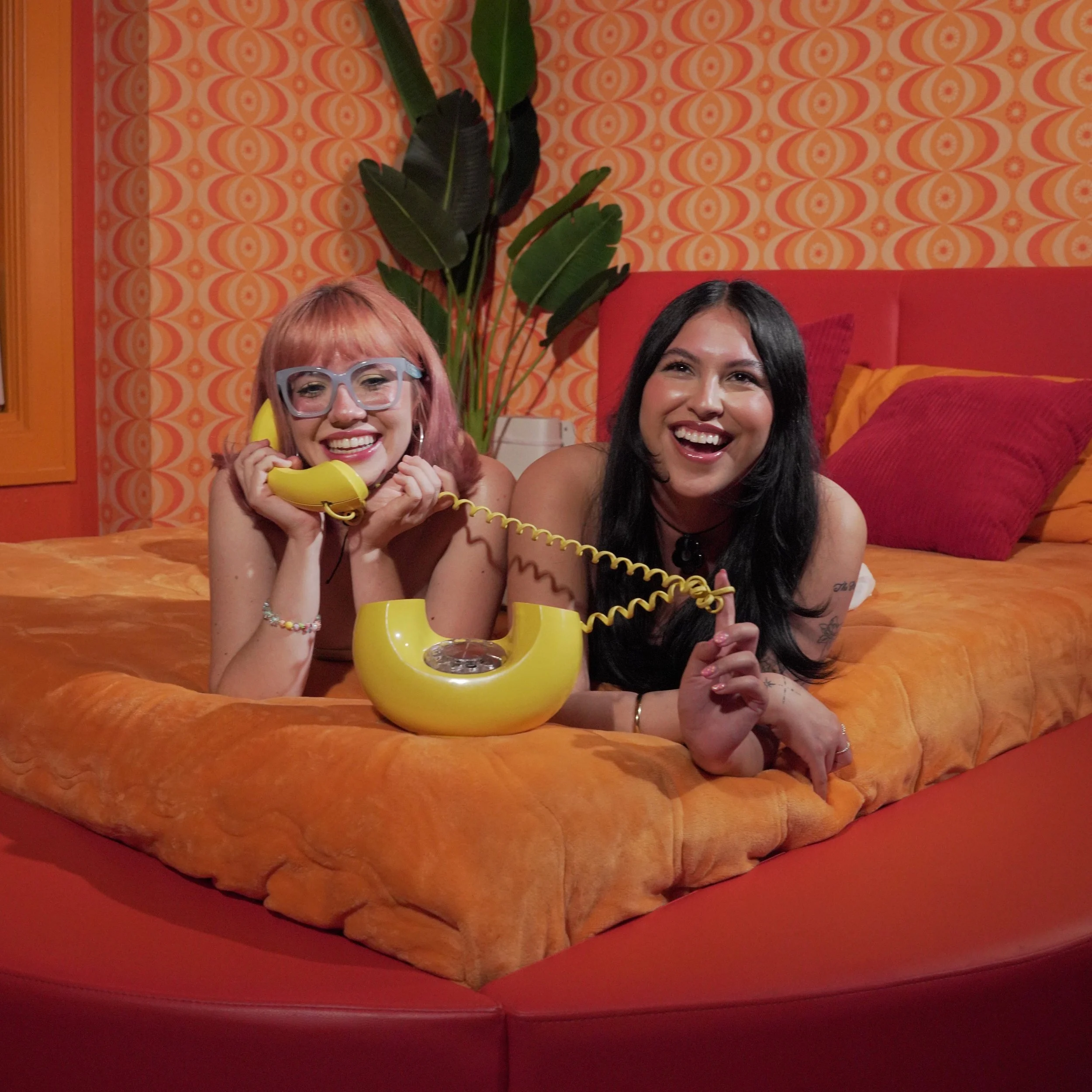
The Tulips do not write from distance. They write from the middle of things.
“It was a lot about love and loss,” Andrea says, reflecting on their early music. “We were both going through weird situations, so that was a really big inspiration.”
They don’t overcomplicate their process. “This is what we’re feeling, this is what we’re going to write about.”
What they are really describing is emotional alignment. Two people experiencing similar things at the same time and translating that into music without overthinking it.
It is what makes their songwriting feel natural. It is also where they feel the limits.
When they try to move into topics like identity or insecurity, something shifts.
“It’s hard to not sound cheesy,” Andrea admits. “We’ll try, and then we’re like, ‘ugh, no.’”
There is an awareness in that hesitation. Honesty is not just about subject matter. It is about whether it comes out in a way that feels true.
For now, they stay close to what they know. And what they know is how to feel deeply.
“We feel very deeply,” Julia says. “And it just makes it easy to write.”
Trying to define The Tulips too precisely feels like missing the point.
“At the root of it, it’s indie pop,” Andrea says, though even that feels flexible.
Their influences move freely. They are not tied to one genre or sound. “We like everything,” Julia says. “It just depends on what we’re feeling.”
They point to The Marías for atmosphere, Clairo for the foundation of bedroom pop, and Ariana Grande for vocal arrangement and layering.
Influence, for them, is not about imitation. It is about permission.
“How we’re growing as people is how our music evolves,” Andrea explains. “If we’re happier, the music is happier. If we’re sad again, it’ll be sadder.”
Their sound is less a fixed identity and more a reflection of where they are at any given moment.
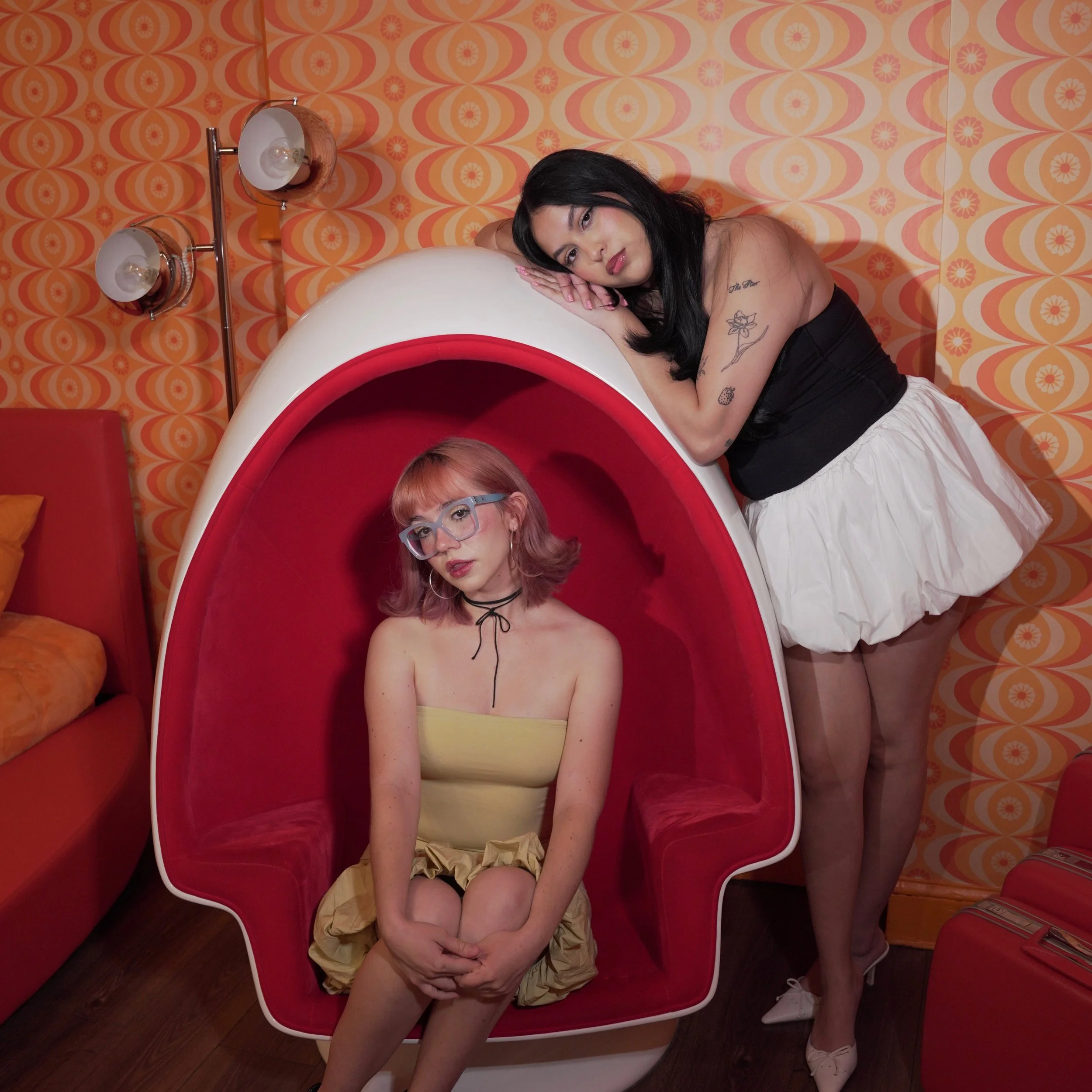
“Still Love You (Todavía)” and the Moment Things Shifted
If there is a point where things begin to feel different, it is with Still Love You (Todavía).
“It was kind of a writing exercise,” Julia says. Something small. Not meant to carry weight.
That changed after a The Marías show. “That concert changed my life,” she says. The feeling stayed with her long enough to turn into something else.
The song centers on a contradiction. Holding love for someone even after everything falls apart.
“It could be about any bad relationship,” Julia explains. “But still having love for that person at the end of the day.”
They did not expect it to resonate the way it did. But once they teased it online, the response shifted everything.
“It did very well,” Andrea says. “So we were like, why not just put it out?”
The Spanish verse added another layer. “I’ve always wanted to do a song in Spanish,” Andrea says. “We were unsure, but people loved it.”
More than anything, the response gave them clarity.
People were not just listening. They were connecting.
As their audience grows, largely through TikTok, The Tulips are starting to think about what comes next.
For now, their answer is simple.
“Stay independent as long as you can,” Julia says. “Own everything yourself.”
Andrea says it differently. “This is literally our baby.”
It is not just about control. It is about attachment. About knowing what they have built and not wanting to lose it too early.
“We don’t want to just give it away,” she says.
Independence, at this stage, feels less like a strategy and more like something they need to hold onto.
For a long time, their audience existed online. Comments, usernames, numbers on a screen.
Then people started showing up.
“People will drive longer than an hour to come see us,” Julia says.
“We had people come on a school night,” Andrea adds. “From San Diego.”
The shift is small but significant. The people who supported them from a distance suddenly became real.
“They don’t seem real to us,” Andrea says. “And then we meet them, and it’s like, oh my gosh, you’re actually here.”
It changes things. It makes everything feel more tangible. More real.
The Tulips do not talk about the future in fixed terms.
There is an EP coming. More shows. Maybe a tour. Maybe collaborations.
“We’re still figuring it out,” Andrea says. “Luckily, people want to listen to us figuring it out.”
That might be the most accurate way to understand them. Not as something finished, but as something unfolding.
Not fully certain, not fully defined, but moving forward anyway.
And in that space, somewhere between uncertainty and intention, they are building something that still feels like theirs.
For now, that is enough.