The Art of Being Heard: Ksher on Solitude, Becoming, and Learning to Be Understood
By. Alicia Zamora
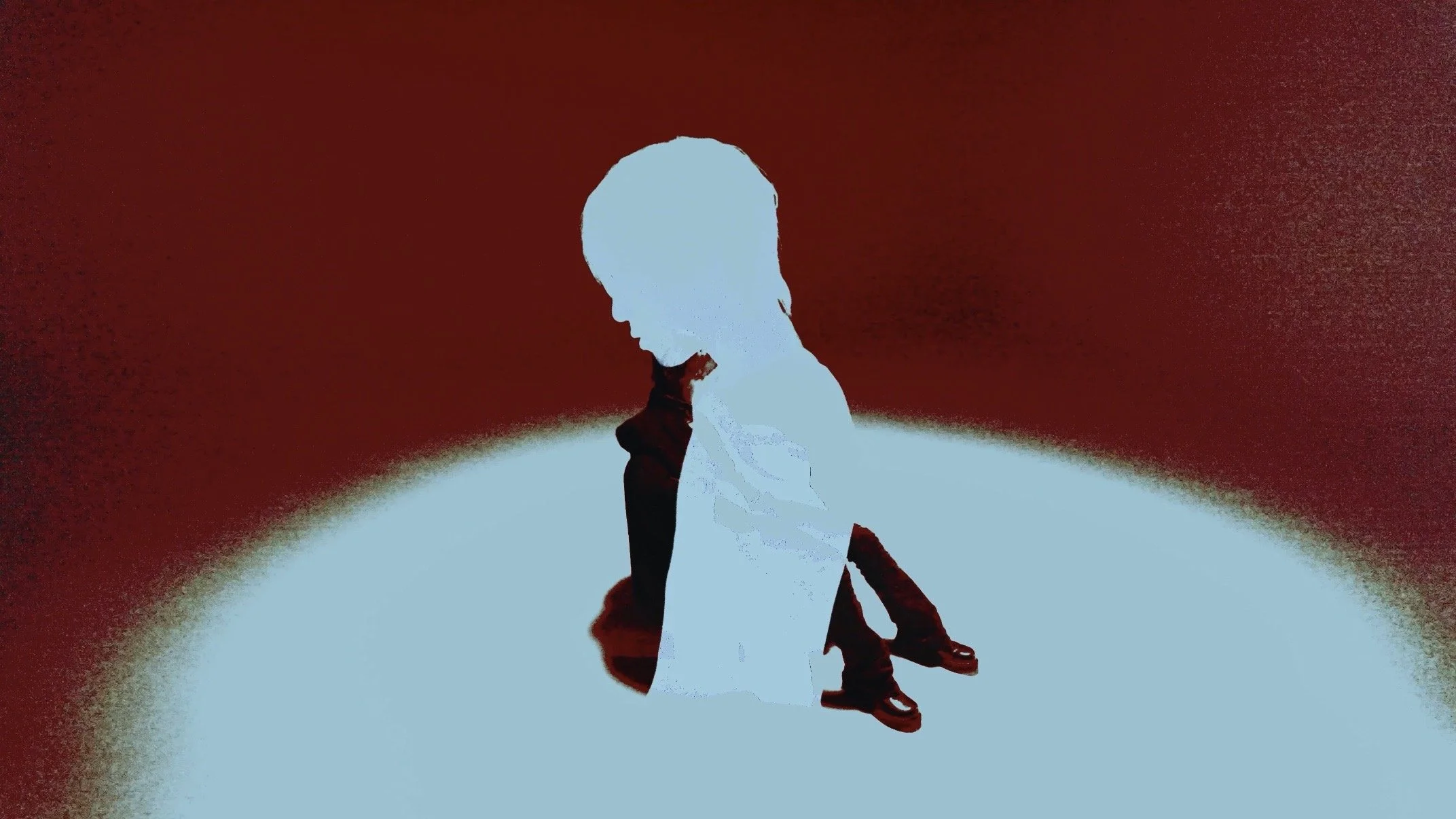
“I’ve always felt a little outside of everything.”
Meet Ksher through this exclusive interview for Alicia’s Studio, where conversation moves far beyond music and into the quieter emotional world that shapes it. While discussing his recent release “Hour,” Ksher speaks with a kind of honesty that feels unforced—reflecting on loneliness, routine, identity, and the comfort he found in turning private thoughts into songs.
For him, music never began as performance. Long before he considered himself an artist, it existed as something much more personal: a private outlet for emotions he struggled to explain out loud. “There was a time when I hated opening up about my struggles to the people around me,” he explains. “So I’d write them out privately as a way to release those emotions.”
That instinct—to internalize first and express later—still defines much of his work today.
Growing up, Ksher gravitated toward music that felt personal and emotionally direct. He remembers spending hours alone in high school thinking about life, his future, and where he fit into everything around him. At the same time, he was immersed in the music dominating the charts, particularly the rise of hip-hop around 2016. Somewhere between introspection and influence, songwriting became inevitable.

“Because I’ve always loved music that tells a personal story,” he says, “it felt very natural for me to start writing my own lyrics.”
What makes Ksher interesting isn’t just the emotional vulnerability in his music, but the contrast between the person listeners imagine and the person he describes himself to be. His records can feel distant, heavy, even emotionally guarded at times—but he laughs at the idea that he’s hard to approach.
“A lot of people misunderstand me as someone who is difficult to approach or a man of few words,” he says. “But actually, it’s quite the opposite. I’m surprisingly talkative once you get to know me.”
Living Inside the Routine
As the conversation continues, another picture begins to form: someone whose life has quietly revolved around creation for years.
Currently balancing university life with music, Ksher describes his daily routine almost casually—late nights in the studio, classes in the morning, very little sleep in between.
“For the past few years, my life has just been a cycle of the studio, school, and sleep,” he says. “Since I’m graduating soon, I expect it’ll just be the studio and sleep from now on.”
There’s something revealing about how matter-of-factly he says it. No attempt to romanticize exhaustion or overstate the struggle. Instead, it feels like someone who has slowly built his entire life around chasing a sound he still believes is evolving.
And evolving is important to him.
Ksher doesn’t speak about music like someone trying to arrive at a final version of himself. In fact, he seems almost resistant to the idea of artistic completion altogether.

“I’m still in the process of finding my musical identity,” he says. “And honestly, I think I’ll be searching for it my whole life.”
That openness to change appears everywhere in the way he talks about music. He constantly searches for new sounds, new atmospheres, new references. Even his relationship with listening has changed over time. Where he once connected most deeply to emotionally intense songs, he now finds himself drawn toward overall atmosphere and sonic flow.
“I’ve learned to appreciate the entire sonic journey rather than just a single emotional chord.”
Hour and the Feeling of Existing Between Emotions
That perspective becomes especially important when discussing “Hour”, a song built around emotional ambiguity and the slow passage of time.
Rather than presenting the track as a straightforward story about heartbreak, Ksher describes it more as a feeling suspended in uncertainty—something intentionally open-ended. The repetition of “1 hour, 2 hours, 3 hours” acts less like a literal countdown and more like emotional tension stretching itself endlessly forward.
“It can be interpreted as literal time passing,” he explains, “or perhaps a countdown right before an emotional release.”
The emotional core of the song, though, runs deeper than romance alone.

“I feel like I’ve lived with those emotions my entire life,” he says.
“It didn’t start from a simple love story; rather, it began with the feeling that I don't quite fit in perfectly with society.”
That feeling—being slightly disconnected from the world around him—becomes one of the most revealing moments in the entire conversation.
“It’s that sense of being an outsider,” he says, “never fully belonging anywhere, that serves as the foundation for my music.”
Suddenly, Hour stops sounding like a song only about waiting for another person. It becomes something broader: waiting for clarity, waiting for connection, waiting for a version of yourself that finally feels settled.
Even the emotional conflict inside the song reflects that uncertainty. When asked whether the track is about holding on or letting go, Ksher resists choosing one side.
“It’s a situation where both feelings coexist,” he explains. “I tried to capture the emotional tension of holding on to someone physically while realizing in my head that I’m already letting them go.”
Being Understood
One of the most striking moments in the conversation comes near the end, when Ksher is asked a simple but revealing question: what matters more to him right now—understanding himself, or being understood by others.
Without much hesitation, he chooses connection.
“Right now, being understood by others is my priority,” he says. “I hope to live a life where this cycle repeats: being understood by people, and then turning the new questions that arise within that connection back into music.”
What makes this answer stand out is how grounded it is in real life, not just artistry. For Ksher, “being understood” isn’t an abstract idea—it’s the feeling of someone actually hearing a lyric and recognizing something in themselves. It’s the difference between music that plays in the background and music that quietly stays with someone after it ends.
In that sense, his work becomes less about explaining who he is and more about creating space for shared understanding. The music isn’t just self-expression—it’s communication in its most honest form, where emotion is translated into something other people can hold onto.
And maybe that’s why even his uncertainty feels intentional. Ksher doesn’t present himself as someone who has everything figured out. If anything, the conversation makes it clear that he’s still in the middle of it—still searching, still processing, still trying to understand what he feels through repetition, sound, and reflection.
But instead of feeling unfinished, that search becomes part of what makes the music resonate. There’s a familiarity in it—the sense that not knowing is sometimes more honest than pretending to have clarity.
“First of all, thank you so much for all the interest and support. I’m an artist making music in Korea, and I promise to keep sharing high-quality work more frequently. "
“I hope you can keep Ksher’s emotions tucked away in your life and bring them out whenever they resonate with you. Please keep streaming and saving my tracks. Love you all”
It’s a quiet way of saying that music, for him, isn’t meant to be consumed once and forgotten. It’s something that returns when life calls for it again.