A Band in Motion: The Mows and the Making of “Moments”
By. Alicia Zamora
A Record Built on Emotional Contrast
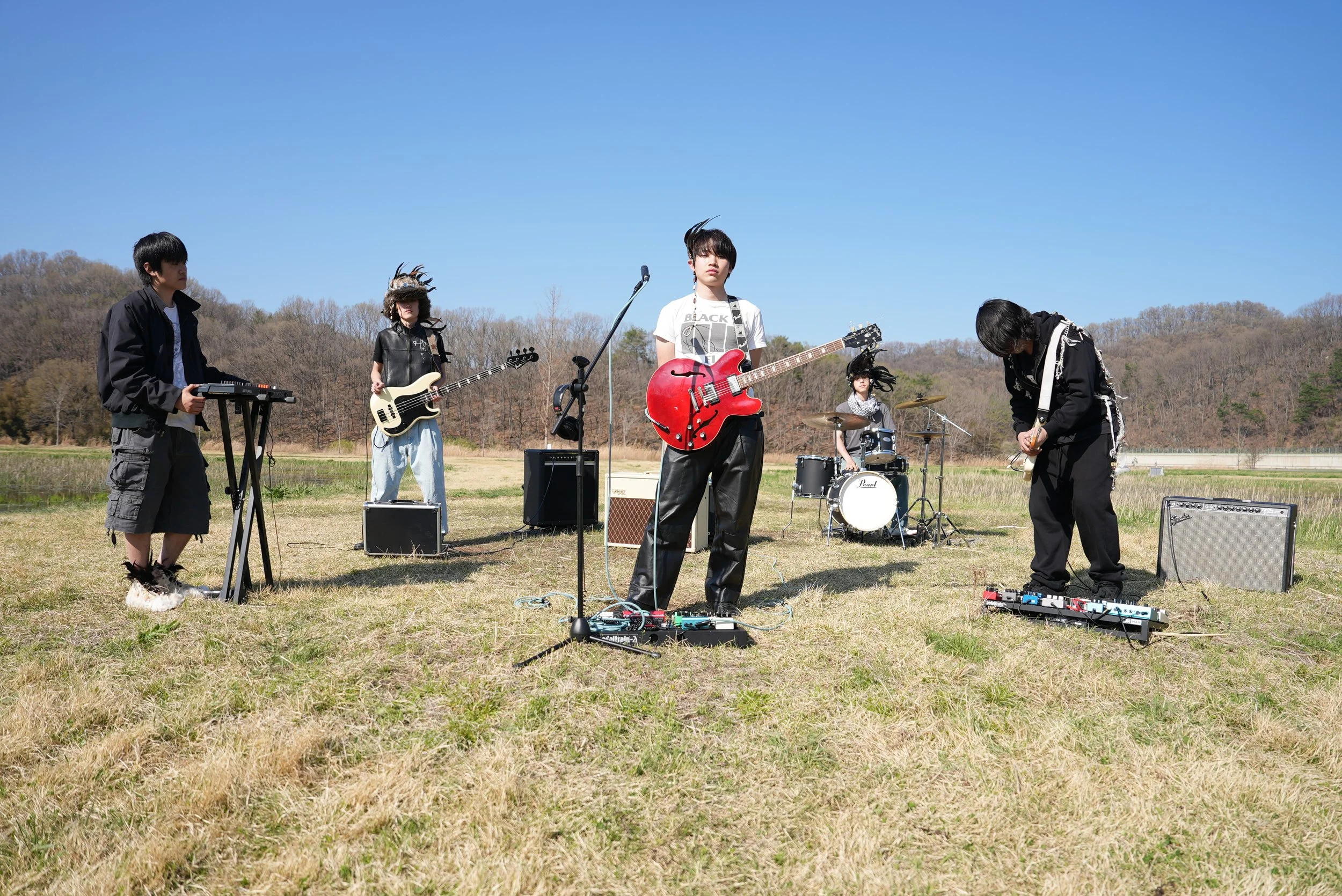
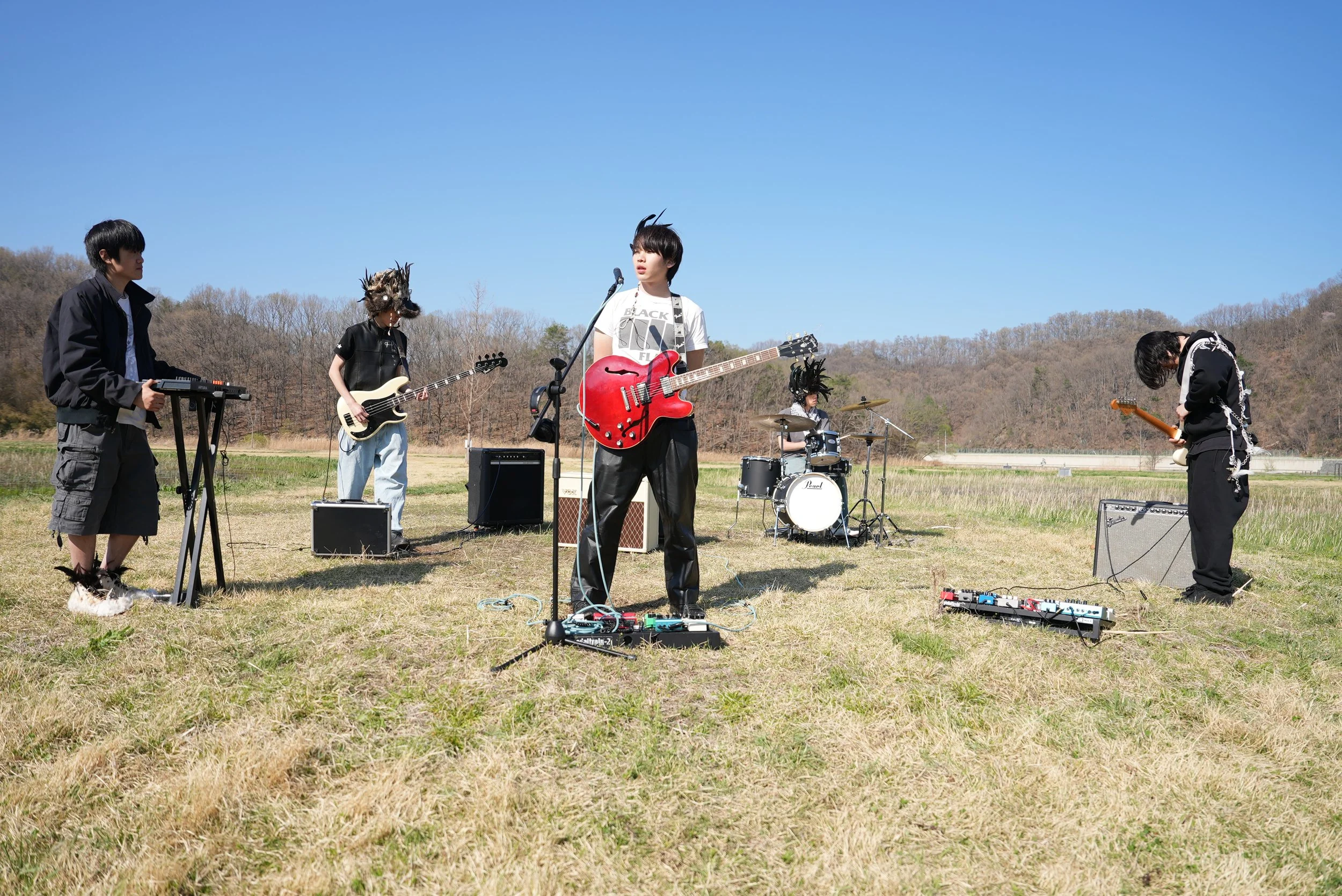
The Mows are back at Alicia’s Studio for a second interview, returning with a new member, a fuller schedule, and a new release that feels like a clear step forward while still sitting in a very real in-between space. Since their last conversation, there’s been movement on every front—more shows, more writing, more time spent inside the process of figuring out not just what their sound is, but what it’s becoming in real time. Moments, their latest EP, doesn’t feel like a finished chapter. It feels like the pages being written while they’re still living them.
“There are definitely times when it’s tough,” Tommy says early in the conversation, not trying to dramatize it, just naming it plainly. “But whether it’s performing or creating, we always try to give our best, believing it will all become a foundation for our future.” That word—foundation—keeps coming back throughout the interview in different forms. Not as something solid and complete, but something still being built, something they’re actively standing on while continuing to add to it.
What stands out immediately about Moments is how emotionally alive it feels. The record doesn’t try to organize feelings into something clean or easy to understand. Instead, it leans into contradiction—frustration sitting right next to clarity, softness breaking through tension without erasing it. “LOVEVERYTHING” opens the EP with that kind of push and pull, starting from a darker emotional place before shifting into something more open, but never pretending the first feeling didn’t exist.
“The intro starts with a rather cynical sound,” Tommy explains.
“At first, I was writing from a very negative place—self-hatred and frustration with not being able to grow. But then I thought, in a world already filled with so much hate, what’s the point of adding more?”
That realization didn’t erase the original emotion—it redirected it. “So I decided to shift the message to ‘let’s just love everything,’” he says. “In the second half of the song, we bring in a brighter sense of love, along with the complexity that comes with it.”
That idea of complexity shows up again in “No More Future,” but in a much quieter way. The track moves slower, like it’s thinking while it’s playing. “Before working on the song, I used to feel frustrated when I met up with old school or neighborhood friends who didn’t seem like themselves anymore,” Tommy says. “They’d act overly grown-up, and when I joked around, they’d look at me like I was being childish. I also struggled with seeing my parents age and feeling my own personality becoming more ‘mature’ in ways I didn’t like.”
There’s a pause in how he talks about it, like he’s still processing it even after writing the song.
“But while working on the track, I came to accept that time inevitably moves forward,” he continues. “I realized it’s better to let it go, embrace it, and enjoy the present without regret—and I tried to reflect that in the song.”
“Out of Time” and Confronting the Unspoken
If Moments has a center of gravity, it’s that tension between resisting change and slowly learning how to sit inside it. That shows up even more directly in “Out of Time,” which carries a different kind of emotional weight—less about nostalgia, more about confrontation with time itself.
“I sometimes have thoughts about death,” Tommy admits, without overexplaining it.
“And I often feel like there’s still so much I haven’t done yet—so if I were to die early, I’d probably regret those things a lot.
“I felt that ‘Out of Time’ was the right kind of music to express those thoughts honestly. Since it deals with death, I approached the lyrics more carefully and sincerely than any other song on the EP.”
Even in its heaviest moments, the EP never feels detached from life. It feels close to it—too close sometimes. That closeness is part of what makes it hit differently.
When asked about “A Wheel of Fire,” Gamyoung shifts into describing the visual and conceptual side of the band’s process.
“It’s a song about rediscovering a path we had forgotten in our earlier track ‘Madang,’ and coming together to sing our own song in unity,” he says.
“We thought it would be interesting to incorporate a black comedy element—like acting as if we were religious fanatics. We also imagined visuals of a primitive tribe, forming a circle and running together.”
It sounds theatrical on paper, but in their explanation, it comes from something more instinctive than conceptual. It’s not about shock value—it’s about translating emotion into imagery that feels physical.
That same attention to feeling shows up in the quieter tracks too. “Sunny Sunday” holds a different kind of emotional truth—one that sits in everyday loneliness.
“One of the loneliest moments is a bright Sunday when you’re alone at home,” Tommy says. “You hear people outside having fun, and when you check Instagram, everyone seems to be out enjoying themselves. That contrast makes the loneliness feel even stronger.”
Even the naming of their songs reflects how closely they tie emotion to lived experience. “For a song like ‘A Wheel of Fire,’ the title came naturally because the image immediately came to mind while listening,” he adds. “But for ‘Sunny Sunday,’ it was based on the lyrics and that feeling of contrast.”
Sound, Identity, and Finding a New Balance
Across the EP, The Mows are constantly paying attention to detail—not just in sound, but in texture, mood, and the small emotional shifts inside each track. “If you listen closely,” Tommy notes about “A Wheel of Fire,” “you’ll notice parts where we reference the lyrics and even the sound from ‘Madang.’”
That layering carries over into how they reflect on the project's overall making. For Shihyun, it was about time and expectation.
“I realized that it takes a lot of time and many steps for a song to go from being written to actually being released,” he says. “Since this is my first time being in a band, I thought it would happen quickly—but it definitely doesn’t. Maybe that’s why I end up listening to our music as much as our fans do and growing really attached to it.”
For Minseok, it was about understanding the full ecosystem around music. “Music videos, promotion, and all those elements are just as crucial,” he says. “They really help the music reach people more effectively. So it’s important to prepare a variety of content alongside the music.”
Gamyoung reflects on growth more personally.
“I became more aware of my own shortcomings,” he says. “I’ve learned what I need to improve and what direction I should move in.”
Junseo’s perspective leans more technical, but it opens up a different side of the process.
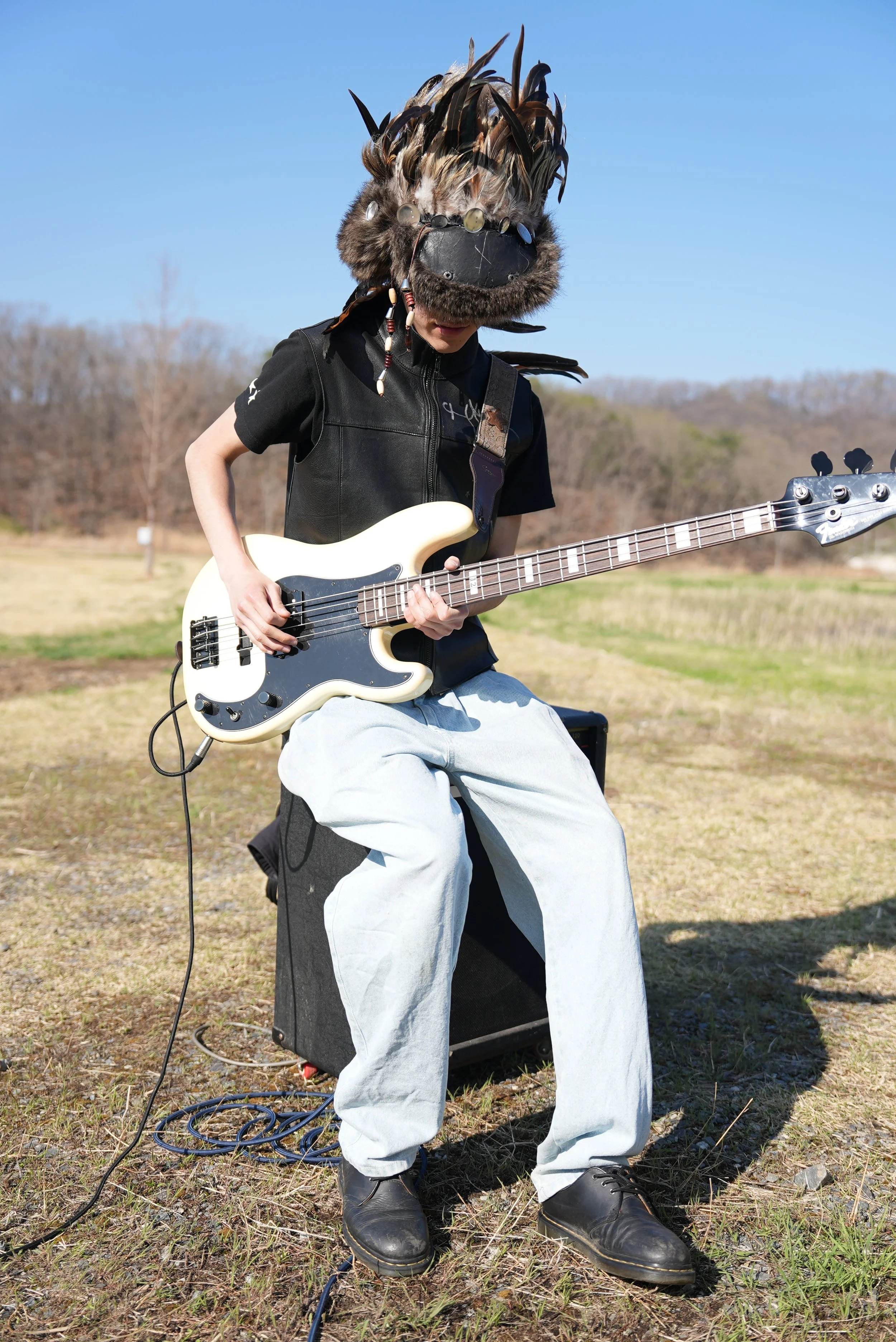
“While recording guitar in the studio, I learned how to mic an amp, how to shape tones, and how engineers build guitar sounds,” he says. “Seeing it up close gave me things I can actually use. I also found myself getting inspired by music I wouldn’t normally listen to.”
Even doubt becomes part of the workflow rather than something separate from it.
“When I feel like a song isn’t good enough, I usually stop for the day and come back later,” Junseo adds. “Or I share it with the band and we work through it together.”
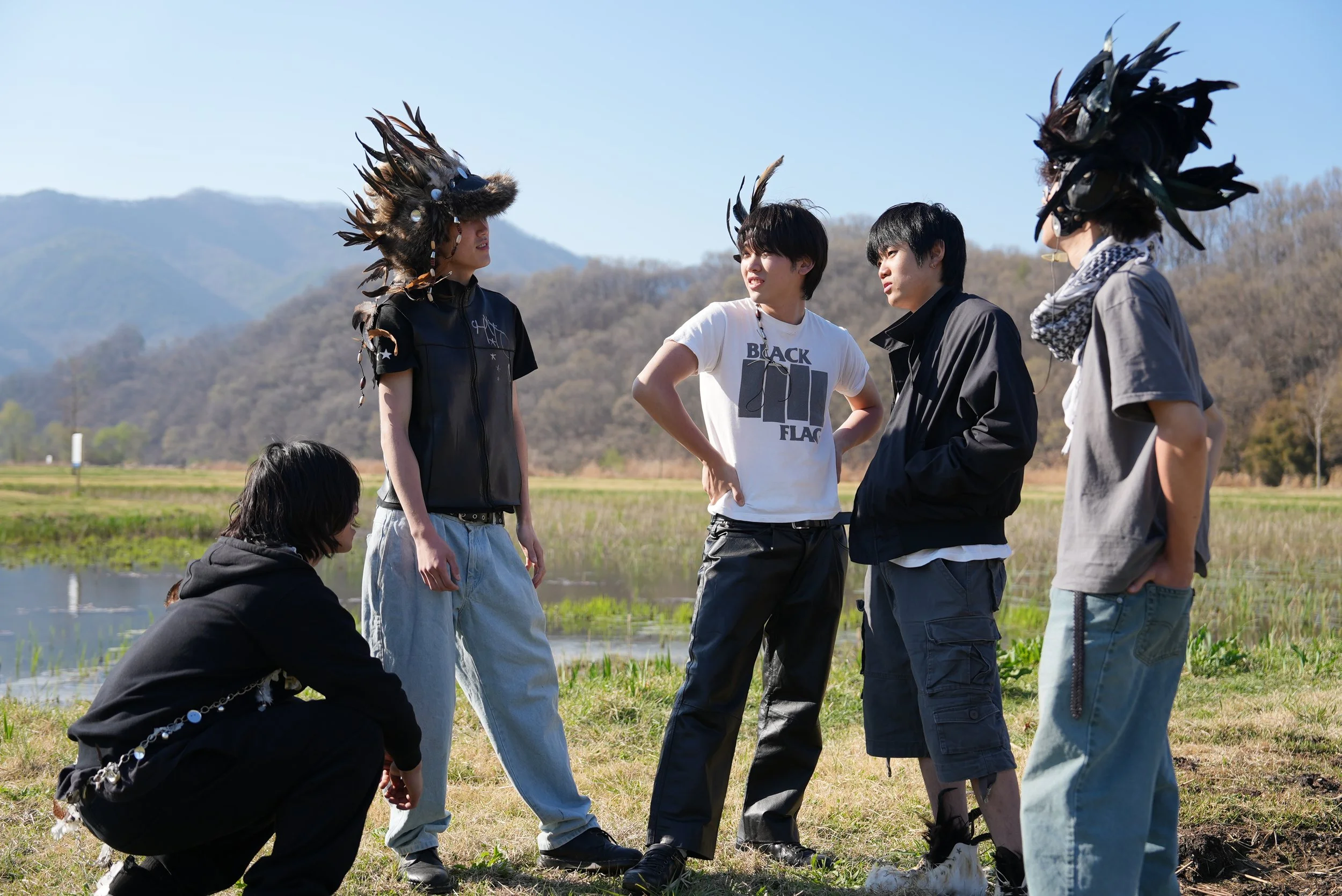
That sense of returning—to ideas, to each other, to the work—is what quietly holds everything together.
When asked what feels most like “The Mows” on this EP, Gamyoung points again to “Out of Time.” “I think it shows a new side of The Mows,” he says, “while also being the moment where that new color comes through most clearly.”
And when asked if they’ve had moments where they felt like, this is us right now, Minseok answers simply:
“We often realize that we share very similar musical tastes. And the more time we spend together, the more naturally we sync as a team. Whenever that happens, it really feels like we’re becoming one as a band.”
Even their influences feel like they’re shifting in real time. “Our sound has become more refined,” Tommy says. “In the beginning, we focused more on raw and rough textures. But while working on this album, I was really into Haruomi Hosono, which led us toward a calmer, more intricate, and polished sound. But we still love our raw energy—we’re trying to find a balance between both.”
Outside of music, Tommy adds something more internal:
“I think what influenced this project the most was simply being alone. Spending time with my thoughts led me to create an EP that focuses much more on emotions compared to our previous work.”
As the conversation closes, the question of what comes next doesn’t feel answered—it feels opened. “I really hope The Mows gets to perform at festivals every year,” Shihyun says. “There’s something about that energy that makes people feel alive.”
Tommy follows in the same honest, grounded tone that carries through the entire conversation.
“There are times when it’s tough,” he says again, returning to where he started. “but we always try to give our best, believing it will become a foundation for our future. And I think it’s safe to say—we’re a band worth looking forward to.”
When he speaks about Moments itself, the focus shifts away from momentum and toward feeling—less about what the record is, more about what it leaves behind.
“Since Moments focuses heavily on emotions, it might leave you with a lot of thoughts—or even make you feel a bit down after listening,” he says.
“But I hope that, like flipping through a photo album, you can fully immerse yourself in those emotions while the music is playing, and then return to your present moment and enjoy it.”
For a band still in motion, it feels like the right note to end on: thoughtful, open, and quietly confident about whatever comes next.