Ted Park on Independence, Instinct, and Building a Career Without a Blueprint
By. Alicia Zamora
Ted Park Learned Early That Music Was Survival
Meet Ted Park through this exclusive interview for Alicia’s Studio, where we sit down in person to talk about the path that brought him here—from a small town in Wisconsin to navigating two countries, two cultures, and an industry that rarely comes with instructions. What starts as a conversation about his beginnings quickly opens into something more revealing: a story about persistence, self-reliance, and figuring things out in real time.
Ted doesn’t romanticize how it all started. Growing up in Madison, Wisconsin, music wasn’t part of some larger plan—it became necessary. When his family moved to South Korea toward the end of middle school, the transition hit hard. The culture shift, the isolation, the feeling of being out of place even within his own identity—it all built up. And instead of trying to explain it outwardly, he turned inward.
That’s where music came in.
Writing became less about expression and more about survival. Lyrics weren’t crafted for an audience—they were a way to process frustration, confusion, and everything that didn’t have an easy outlet. By the time he returned to the U.S. for high school, the decision was already made. Not because he thought it would turn into a career, but because it was the one thing that consistently grounded him.

“It was like therapy,” he explains. Not a spark—something deeper, something he needed.
That clarity didn’t make the decision any easier for the people around him—especially his family.
Ted recalls a moment right before his senior year, when his father called from Korea to ask the question every parent eventually does: what’s next? Ted’s answer was blunt. A low GPA, no real academic direction, and a decision to drop everything to pursue music.
His father flew out the next day.
What could have turned into a breaking point instead became a defining conversation. His father didn’t sugarcoat it—choosing this path would be difficult, uncertain, and most likely unstable. And if it didn’t work out? Ted already had an answer.
If people didn’t connect with his music, he would stay in the field anyway becoming an engineer, a producer, a manager. Whatever it took to remain part of it. That perspective shifted everything. It wasn’t about fame or recognition. It was about commitment.
That was enough.
His father didn’t promise financial backing or industry connections—but he offered support. And looking back, Ted sees that moment as one of the reasons he’s still here.
Now, years later, there’s a quiet full-circle moment in the way things have evolved. When Ted performs in Korea, his dad shows up. They celebrate together. It’s no longer a question of “what if”—it’s something real.
From H1GHR Music to Independence
Ted’s career path hasn’t followed a straight line, and he’s never tried to make it look like one.
Before signing to H1GHR Music, he was already on the verge of a major deal in the U.S.—one he chooses not to name. But a message from Jay Park shifted that direction. What started as a simple Instagram DM turned into days spent in Korea, moving through studios, rehearsals, and creative spaces together.
There was no immediate pressure to sign. No heavy business conversation.
Just connection.
“Regardless of the business,” Jay told him, “I just want to be a part of your journey.”
That was enough for Ted to trust it.
But even that chapter didn’t define him long-term. When he eventually stepped away, there was no big announcement, no dramatic exit. Intentionally so. He didn’t want his career to be framed by affiliation—whether he was with a label or not.
Now working independently, he’s navigating a completely different kind of reality.
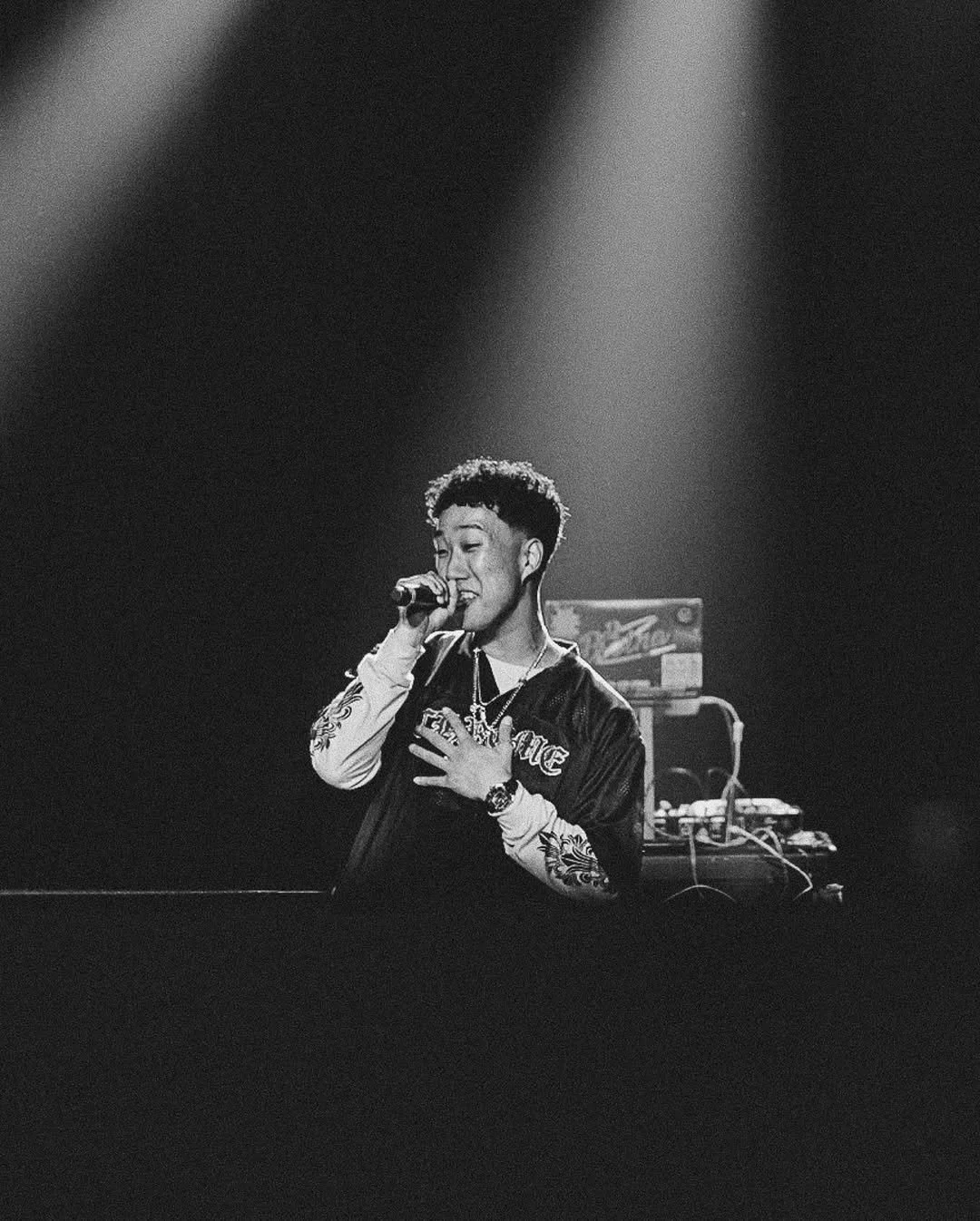
Building Without a Blueprint
Independence, for Ted, isn’t just creative freedom—it’s full responsibility.
There’s a trade-off that comes with it. He’s built a fanbase strong enough to sell shows and create opportunities, but without a label structure, everything circles back. The wins, the losses, the financial risks—it’s all his.
And for a while, he leaned fully into that freedom.
No marketing strategies. No structured rollouts. Just making music, finishing a track, and uploading it the next day. It wasn’t about building hype—it was about feeding the people who were already listening.
But now, there’s a shift happening.
For the first time in his career—even compared to his time with H1GHR—he’s preparing to properly roll out a full album. Something more intentional. More focused.
That shift comes from experience, but also from mistakes.
He’s lost opportunities. Missed deals. Walked into situations without the language or structure the industry expects. And while that’s cost him, it’s also taught him something more valuable—ownership.
When something works, it’s his. When it doesn’t, it’s still his.
That accountability is what drives his growth.
“I can’t blame anyone,” he says. “It’s all me.”
And strangely, that’s what makes it rewarding.
Despite everything that comes with being independent, Ted’s relationship with music hasn’t changed at its core.
He sets a simple rule for himself: the moment making music stops being enjoyable, he walks away.
So far, that hasn’t happened.
If anything, his life has become more grounded around it. He’s stepped away from distractions—less partying, less nightlife—and leaned into a quieter routine. Fishing, hiking, working out, traveling. Carrying a portable studio with him wherever he goes.
Music isn’t separate from his life. It’s woven into it.
Whether he’s in a major city or somewhere unexpected—like Iowa—it stays consistent.
“I’ll keep doing it until I don’t want to anymore,” he says.
There’s no deadline attached to that.
Collaboration, Touring, and Finding His Audience
His recent collaboration with pH-1 on “Home 2.0” reflects another side of his career—one built on long-term relationships rather than one-off moments.
The connection between them goes beyond music. It’s rooted in years of friendship, mutual respect, and shared growth. Working together again felt natural, especially given how much both of their sounds have evolved.
That same sense of connection carried into touring.
Opening for pH-1 on the About Damn Time tour became a pivotal moment—not just for exposure, but for what came after. Halfway through that run, Ted was offered the chance to headline his own tour.
He didn’t overthink it.
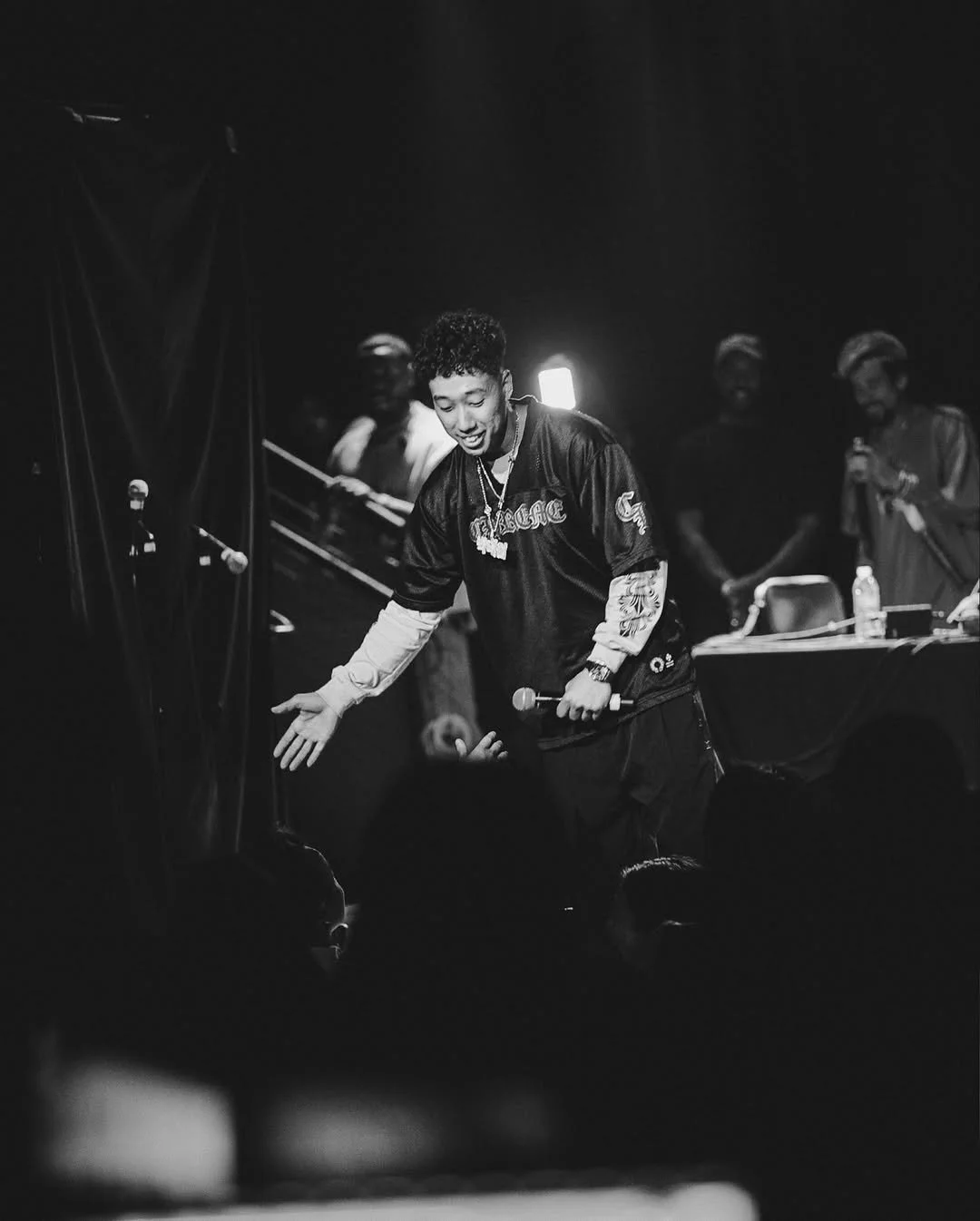
The Tedass Tour was his first time stepping out on his own like that. No heavy promotion, no massive campaign—just a few posts and word of mouth.
And people showed up.
A few hundred in each city. Intimate rooms. Real energy.
For Ted, that mattered more than scale. It wasn’t about selling out arenas—it was about seeing who was willing to come out, stand there, and connect with the music in a shared space.
That’s what made it real.
Touring comes with its own kind of exhaustion—long days, constant movement, unpredictable energy.
So what keeps him going?
“Caffeine.”
He laughs when he says it, but it’s also kind of the point.
Early in the conversation, Ted is direct about the pace he lives at.
“I’m an addict,” he says jokingly when asked about caffeine.
Then, almost immediately, he clarifies—not wanting the moment to be taken too literally.
“Nahhh don’t take it that way,” he adds, laughing.
But what follows explains a lot more than caffeine ever could. He talks about adrenaline, touring, and the way his body adapted to constant movement.
“Just adrenaline that never ended for me,” he explains. “I pretty much toured for I don’t know how long last year.”
Even after it ended, the pace didn’t fully disappear. It just changed shape.
“You can’t afford to hit a slump,” he says when asked about creative lows.
For him, the slump doesn’t really exist in the making of music.
“Making music is really easy for me. That’s my bread and butter.”
That ease becomes one of the most defining parts of his current era.
“I probably make like five songs a day,” he says casually.
That volume recently became very real in a meeting with a company where he played through multiple bodies of work.
“They were just like, ‘when did you make this?’” he recalls. “I was like, this year.”
For Ted, the reaction wasn’t surprising—just a reflection of how differently he approaches output compared to industry structure.
“There’s certain artists that have a nice machine behind them… they can build suspense and release less,” he explains. “For me, my best bet is probably just throw it out.”
He adds that he already has multiple projects finished.
“I have 3 albums made for this year.”
Then, almost matter-of-factly:
“Everything sounds really different.”
Identity, Movement, and Never Fully Fitting One Space
When the conversation shifts toward identity and belonging, the tone deepens.
Ted reflects on moving between very different worlds—Wisconsin, New York, Korea, label environments—and never fully feeling anchored in one place.
“One of the most difficult things for me was going from living in New York… being Asian… and then going to Korea for the first time,” he says.
He continues:
“I never felt like I fit in on that label.”
But the reflection isn’t bitterness—it’s clarity over time.
“I’ve always had a little bit of an identity crisis my whole life,” he admits. “Not even just musically.”
What changed is how he relates to that now.
“For the first time… I finally feel comfortable in my own skin,” he says. “And what makes me happier than anything is that the music I’m about to put out finally shows it.”
When asked about inspiration, Ted gravitates toward artists who don’t play it safe.
“I love Kanye’s music,” he says. “I know he says things people may not agree with, but when you listen to his albums it’s like—oh my god.”
What stands out to him isn’t controversy, but commitment to craft.
“You can hear to the finest detail how much he loves his craft,” he says. “He does not care.”
He also points toward other influences:
“I love The Dream… a lot of R&B guys,” he says. “I’ve been diving into old rock too—My Chemical Romance, The Killers, Green Day, Snow Patrol.”
For Ted, inspiration isn’t genre-bound—it’s energy-bound.
“I think that kind of stuff is really cool,” he adds. “If you go on Spotify and shuffle… every genre, every artist… it’s so good.”
As the interview moves toward upcoming releases, there’s a sense of momentum again—but this time more intentional.
“I just finalized the track list like today,” he says.
When asked about structure, he confirms:
“15.”
And the collaborations:
“I think like eight of them are features.”
Despite the scale, his focus stays simple.
“All I genuinely care about is making music that people can listen to,” he says.
Even when talking about merch, touring, and rollout, that same idea returns—not as strategy, but as grounding.
“It’s love,” he says repeatedly throughout the conversation. “Without anyone listening, this wouldn’t be my career.”
And at the core of it, that’s what stays consistent: not control, not perfection—but output, connection, and letting the work find its way out into the world.