Keoni Usi on Learning to Trust Himself in a Culture of Comparison
By. Alicia Zamora
Keoni Usi returns to the studio for his second conversation with Alicia’s Studio, continuing a dialogue that now feels less like an introduction and more like an unfolding process, one shaped by experience, missteps, small wins, and the constant tension between confidence and uncertainty.
What becomes clear early on is that Keoni is not interested in presenting a finished version of himself. Even as his music begins to reach more people and his opportunities expand, he keeps returning to the same idea: he’s still in the middle of becoming whatever this is supposed to be.
When asked how he currently defines himself, Keoni avoids the label entirely.
“I don’t really call myself an artist yet,” he says. “I think I’m more of a writer. I’m just stubborn, blunt, and creative. Being creative doesn’t mean everything I make is good—it just means I’m always thinking of things, even if they don’t always land.”
That resistance to definition extends into how he views his career trajectory. Rather than treating music as a fixed identity, he describes it as something fluid—something that could change shape entirely over time.
“One year I thought I’d be working at a surf company. Before that I was at Costco. So I don’t really know what I’m supposed to be yet. I just know I’m making music right now, and I’m trying to be honest with it.”
That honesty, for him, includes accepting inconsistency—not as failure, but as part of the process.

“The moment you start labeling yourself, you start competing with everyone else who has that same label. And I don’t really want to do that. I’m just trying to figure it out.”
One of the recurring themes in Keoni’s creative life is comparison—but not in the way people might expect. It isn’t constant. It arrives in bursts.
“I think it happens when you start comparing your accomplishments to other people’s,” he explains. “I’ll look at what I’ve built and start thinking, why am I not on tour yet? Why am I not at that level?”
But what stands out most is how quickly those moments pass.
“Those thoughts only last like ten minutes for me,” he says. “Then I’m like—what the hell am I doing? Why am I thinking like this?”
Still, he doesn’t dismiss the feeling entirely. Instead, he credits the people around him for keeping him grounded when those mental loops appear.
“My friends, my brother, my family—they all remind me: just do it because you love it. Everything else will follow. And I really believe that.”
For him, the tension between ambition and gratitude isn’t something to solve; it’s something to navigate repeatedly.
“I’ll have moments where I think I’m behind. Then I’ll realize I’m eight months in and already doing things I didn’t think would happen this early. It goes back and forth.”

Writing from lived experience, not literal stories
A significant portion of Keoni’s work is rooted in emotional translation—turning personal experiences into something others can access, even if they don’t share the same context
“The themes are pretty typical—love, heartbreak, growth, loss,” he says. “But a lot of the time, the ‘relationship songs’ aren’t actually about relationships.”
Instead, they’re shaped by distance, family tension, and moments of transition that don’t always have a clean narrative.
“Some of those songs are really about my mom, or about feeling alone after graduating when all my friends moved away. But love is something everyone understands, so I write through that lens.”
He also reflects on growing up around what looked like stability in other families, while his own experience felt more fragmented.
“I saw friends with what looked like picture-perfect families. That idea of parents staying together—it felt foreign to me. My parents had me young, things didn’t work out, and a lot of that shaped how I see connection.”
Rather than framing those experiences as central trauma points, he treats them as material—something to reshape into something relatable.
“I try to write it in a way where it doesn’t feel too specific. Even if people don’t share my exact experience, they’ve felt something similar emotionally.”
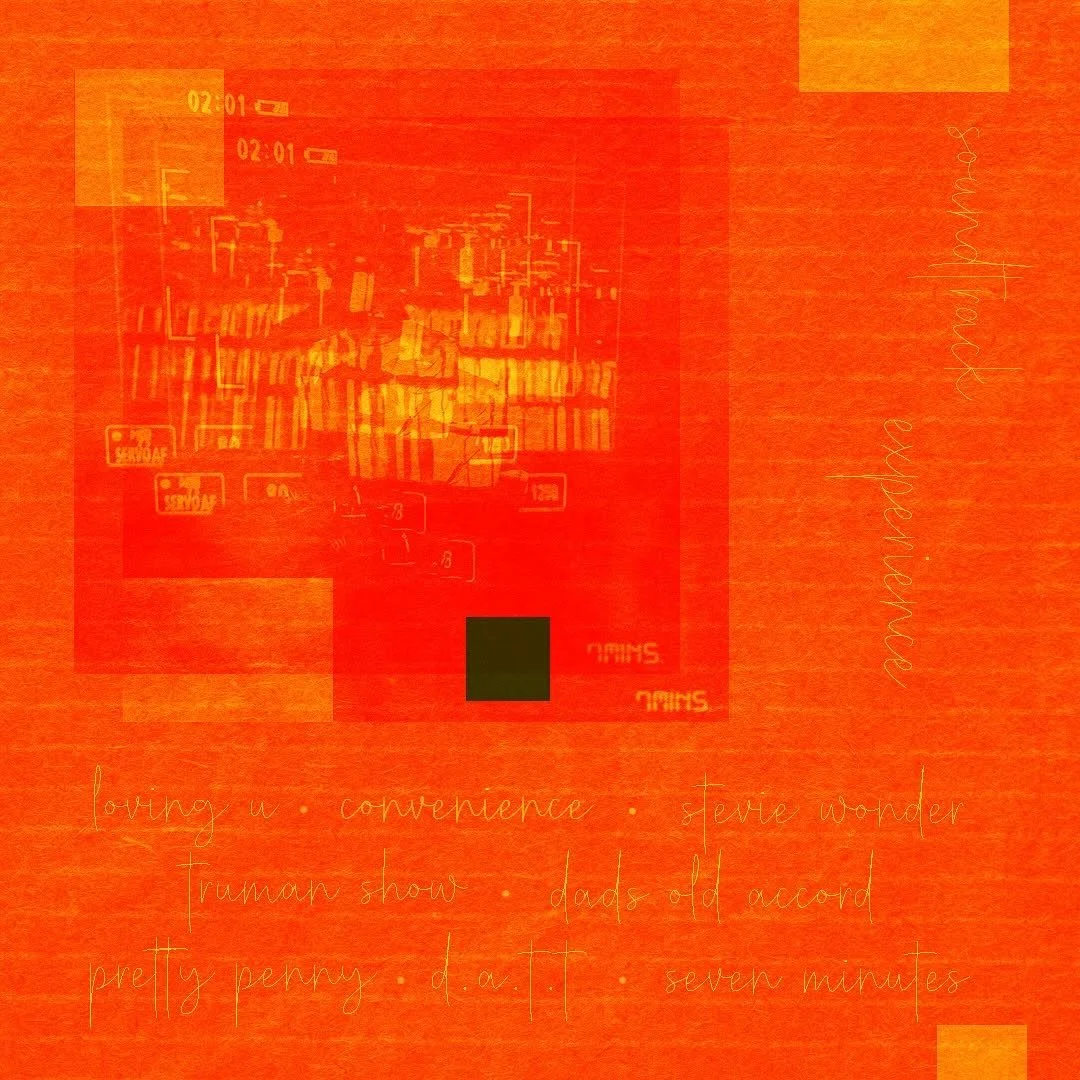
“D.A.T. T was the only song I went in already finished”
Among his catalog, one track carries a different weight entirely.
“D.A.T.T is the most personal one for me,” he says. “It’s about my uncle who passed away.”
Unlike his other songs, this one wasn’t built in fragments or sessions. It arrived fully formed.
“It was the only song I went into the studio already having written. I knew I had to finish it. I wanted something permanent—something that would stay.”
But the meaning of the track extends beyond tribute.
“It’s not just about loss. It’s also about coping. If you’re in a bad situation, or dealing with addiction or something destructive, there are other ways to handle it. That’s what I wanted it to say too.”
The process of writing it wasn’t immediate. In fact, it surfaced later, after years of emotional delay.
“When he passed, I didn’t really process it. I was dealing with my parents’ divorce at the same time, so I kind of pushed it aside. I didn’t have the space to sit with it.”
Only later, when life slowed down, did the weight of it return.
“It wasn’t until I moved out and was alone that I really felt it. That’s when I wrote it. It was sad, but also kind of healing—like I finally got to say what I needed to say.”
Despite the emotional depth of his work, Keoni repeatedly returns to one idea: uncertainty is not a disadvantage—it’s the starting point.
“I didn’t go into this knowing anything,” he says. “I told management I had songs, but I really just had ideas. Then I went into the studio and had to figure it out.”
There was no blueprint, no formal training, no expectation of polish.
“Honestly, that might’ve made it easier. No one expected anything from me yet. And I didn’t expect anything from myself except to try.”
That mindset shaped how he approached the entire project.
“If I forced something that didn’t feel right, that’s when I would’ve failed. But everything felt pretty natural. It didn’t feel like pressure—it just felt like figuring it out in real time.”
When speaking about performance, Keoni shifts away from spectacle and toward atmosphere.
“I want them to be very intimate,” he says. “Even if it’s a bigger venue, I want it to feel close.”
He describes building sets that prioritize emotional texture over visual excess.
“I like when it’s dark, maybe just one light. I want people to focus on the music, not everything else happening around it.”
His vision includes a full live band—one that changes the energy of the songs entirely.
“I’d love like seven or nine people on stage. Right now it’s six. But what they do completely changes how the music feels live.”
Rather than replicating recordings, he aims to reinterpret them.
“The live version is never the same. I rearrange things. I give my band space. They’re too talented not to.”
“If it lasts ten years, great. If it doesn’t, that’s fine too”
When asked about long-term goals, Keoni avoids traditional markers of success.
“I just want to do this as long as it makes sense,” he says. “If I can take care of the people around me through it, that’s enough.”
He’s also aware that longevity in music is unpredictable.
“This could last ten years, or it could not. And that’s okay. I don’t really have control over that part.”
Even the idea of legacy is reframed.
“I don’t want to be known for chasing something I didn’t care about. I just want to be honest with what I made while I was here.”
If there’s one idea Keoni returns to most often, it’s that progress is internal, not comparative.
“The biggest obstacle in improving your work is yourself,” he says. “It’s not other artists.”
That belief removes him from the competitive framing many newcomers adopt.
“When people say I’m their competition, I’m just like… I don’t even know if I’m competing. I’m just making things.”
Instead, his focus remains on curiosity and iteration.
“Sometimes I make something and I’m like, that sucked. Other times I’m like, I can’t believe I made that. Both matter. That’s how you grow.”
As the conversation closes, Keoni’s perspective doesn’t resolve into a final statement. Instead, it settles into something more open-ended—less about arrival, more about continuation.
“I don’t know what I am yet,” he says. “But I know I’m still moving.”
And for now, that seems to be enough.