Inside the Mind of Lyle Kam: Overthinking, Vulnerability, and ‘A Possible Solution’
By. Alicia Zamora
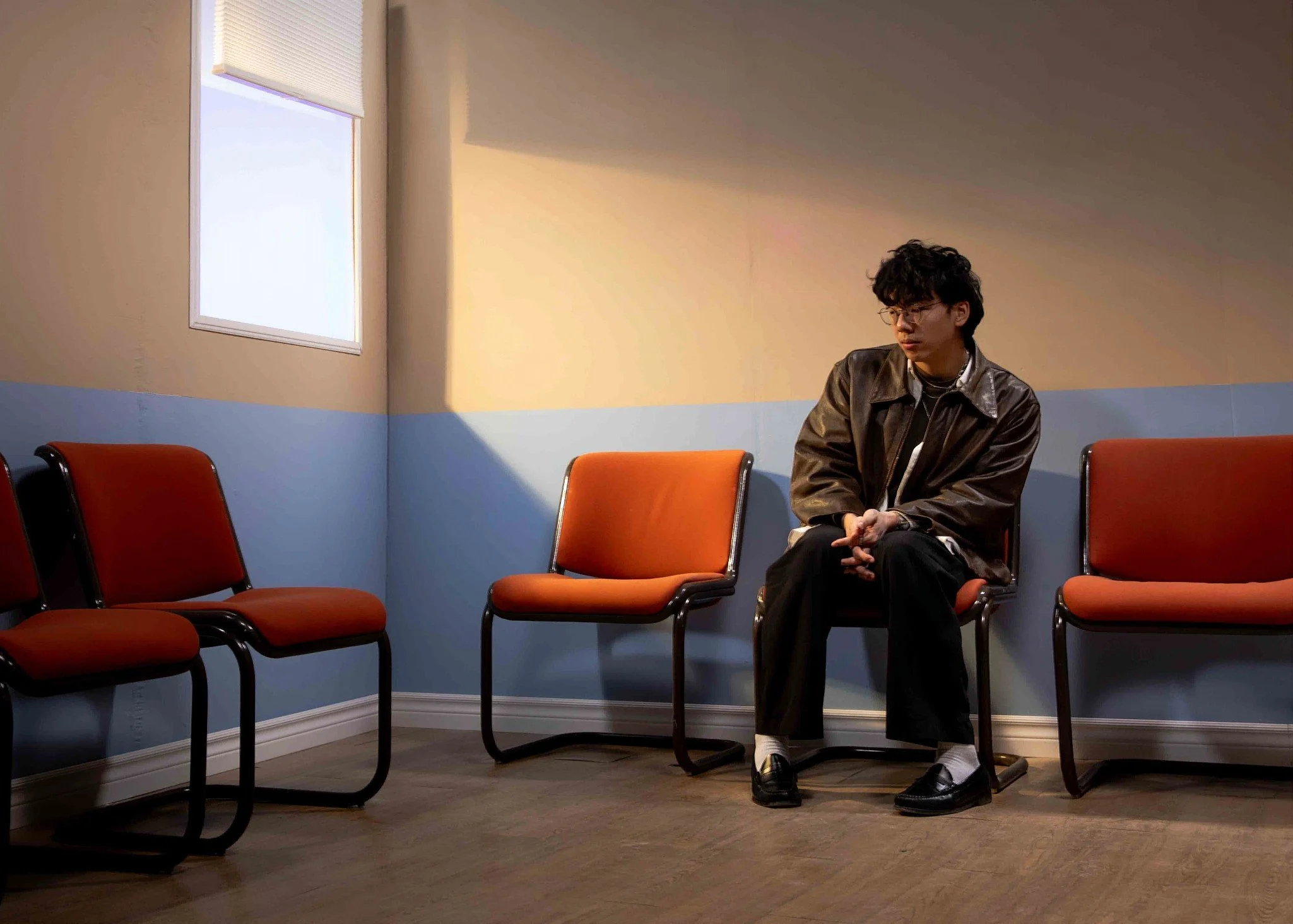
There’s something quietly comforting about talking to someone who understands what it feels like to live inside their own head. When I sat down with Lyle Kam over Zoom, our conversation drifted through overthinking, creativity, vulnerability, and the emotional weight behind his upcoming EP, “A Possible Solution”. What started as an interview quickly became something more personal — two overthinkers unpacking the exhausting beauty of constantly analyzing everything around them.
Kam, a Toronto-based singer-songwriter making indie pop alternative music, describes himself as “a very thinky person,” someone who moves through the world actively processing every interaction, emotion, and passing thought. Even in casual moments, his brain rarely quiets down. “If I’m on a walk and somebody runs into me,” he explains, “I’ll be like, ‘That sucks,’ and then I think about it more… maybe that would ruin somebody’s day.” It’s not just observation — it’s constant reflection, an endless loop of trying to understand both himself and the people around him.
That same level of introspection bleeds directly into his music. While some artists create larger-than-life alter egos, Kam says the version listeners hear is simply an amplified extension of who he already is. “I don’t think there’s anything that different or that I’m being somebody that I’m not.”
As the conversation unfolded, it became clear that music is less of a career for Kam and more of a way of existing. Whether he’s writing, experimenting with sounds, or building beats, creating has become the one thing that fully pulls him out of his own head.

“I’m just having the most fun when I’m doing music,” he says.
Still, even creativity comes with its own cycle of self-doubt.
When I asked what usually ruins a song first — overthinking, honesty, or timing — he answered immediately. “It’s definitely overthinking,” he laughs. “I have a really bad habit… when I’m writing songs, I’ll often prematurely scrap an idea because I feel like it’s been done or someone else has used a melody.” The problem, he explains, is that once the questioning starts, it snowballs. “It kind of halts the creative flow.”
That mindset became one of the central themes behind “A Possible Solution”. While Kam says traces of overthinking have always existed in his writing, this project marks the first time he’s confronted it directly. “I wanted to really be like, ‘This is who I am. This is how I think. This is a portal into my brain.’”
There’s something refreshing about the way he talks about vulnerability — not as something polished or poetic, but as something messy and unfinished. Earlier in his career, Kam admits he was obsessed with sounding profound. “I was so obsessed with trying to be poetic and deep,” he says. “I envisioned someone listening to it and being like, ‘Wow, he’s so smart.’” Now, though, he finds himself gravitating toward honesty over perfection. “These days, it’s a little more unfiltered,” he explains. “I relate more to people that say things how they’re actually feeling.”
That rawness also explains why his songs feel so personal while still leaving room for listeners to find themselves inside them. Kam intentionally balances specificity with openness. “I like to make it specific enough that people understand I’m not just trying to make something generalized,” he says, “but not so specific that they lose touch with it.”
Even the “extra yearning” version of one of his song “face again” — a stripped-back release inspired partly by internet “yearn core” culture — reflects that same emotional philosophy. Beneath the humor, the alternate version gives listeners space to sit with the lyrics more intimately. “The songs are already very sad and depressing, but done in a pop way,” he jokes. By pulling back the production, the emotion becomes harder to escape.
But beyond the music itself, what stood out most during our conversation was Kam’s relationship with vulnerability. Unlike many artists who describe openness as something they had to learn over time, he sees it as essential.

“I think it’s always good to be vulnerable,” he says simply. “And I think songs help people be vulnerable, which is why I love music so much.”
That perspective eventually led us into a deeper conversation about perception — the strange discomfort that comes with being truly seen online. I admitted that posting personal writing often scares me more than publishing interviews or reviews because it feels like people are suddenly perceiving me instead of the work. Kam understood that fear immediately.
“I’m starting to realize that people can perceive you in ways that are out of your control,” he says. “And I think for some people, that’s a scary thought to have.” But instead of letting it consume him, he’s learned to accept it. “If it’s out of my control, then there’s nothing I can do.”
That acceptance seems to come with experience. Since first releasing music, Kam says the one thing he’s grateful never disappeared was his genuine love for creating. He recalls a recent conversation with a friend who asked whether he still actually enjoyed making music — a question that caught him off guard. “Why wouldn’t I be doing it if I didn’t enjoy it?” he remembers thinking.
The realization stuck with him because he’s become increasingly aware that not every artist creates from passion alone. “There are people doing music who don’t enjoy it,” he says, still sounding slightly bewildered by the idea. “For me, throughout all the years, that’s the only thing that I’ve still had the drive for.”
That passion is also why he obsesses over every detail. Kam admits he can spend hours fine-tuning sounds until they feel perfect in his head. His last self-produced project took two years to complete because of how deeply he overanalyzed every song. “That’s a blessing and a curse,” he says. This time around, though, he intentionally loosened his grip on control and trusted collaborators to help shape the project — a decision that sped up the process dramatically.
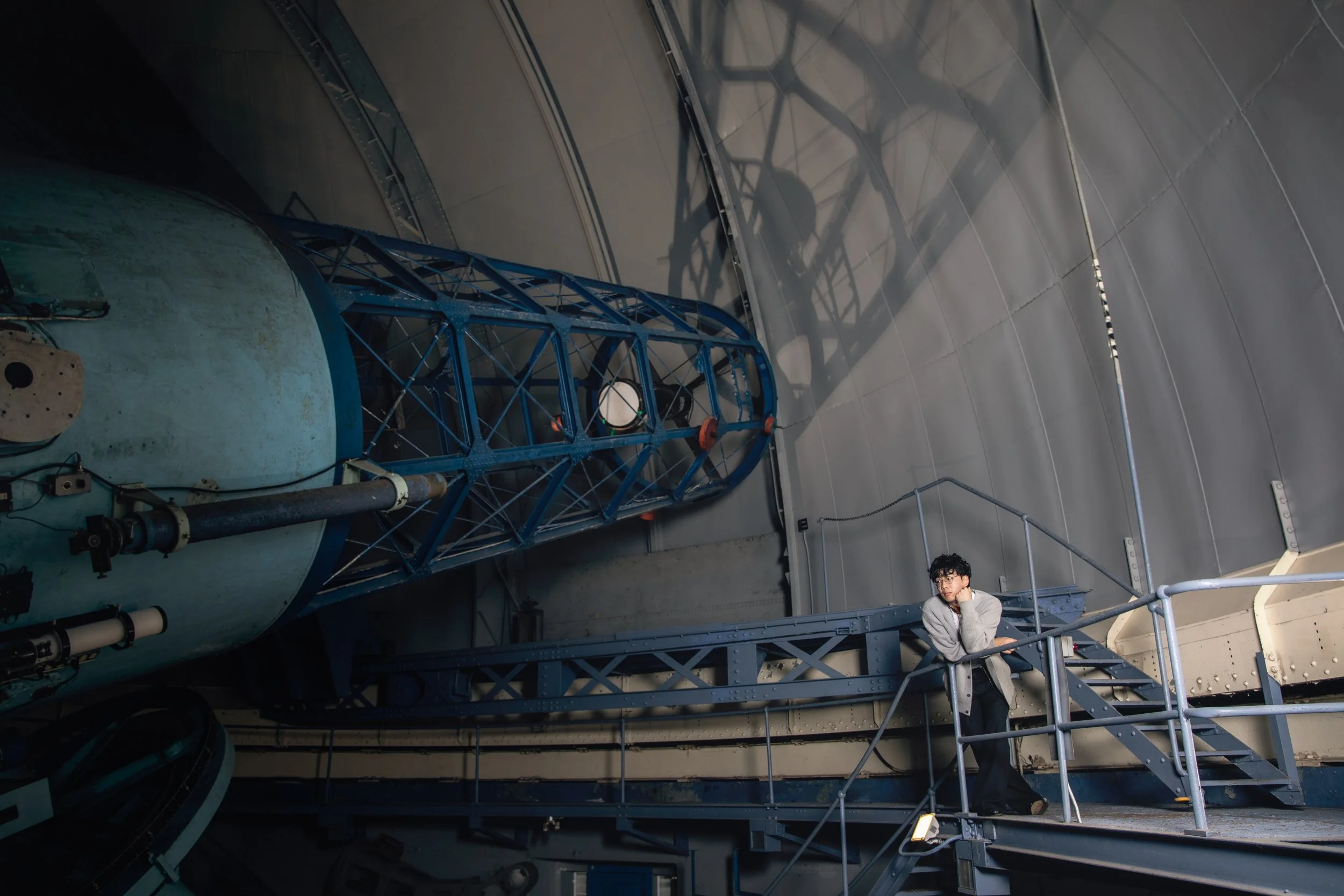
Even then, the overthinking never fully disappears. During one part of our conversation, we laughed about how differently people process thoughts. Kam described seeing a TikTok where someone explained how one tiny comment led their brain into a completely unrelated mental tangent within seconds. “Realizing different people don’t always have those crazy tangents,” he says, “I was like, wow… I feel like that would be nice to just have a switch to turn it off sometimes.”
Ironically, it’s that same tendency to overanalyze that makes his music resonate so deeply with listeners. Kam told me about a recent moment when one of his songs was used in a YouTube series called House of Feelings. Originally, he wrote the track as a reflection on feeling trapped in repetitive cycles of life and overthinking. But the show reframed it as a song about uncertainty inside a situationship.
“I didn’t mean for it to be interpreted that way,” he says, “but it was understood that way.” Instead of resisting the reinterpretation, he embraced it. “I can see the parallels between wanting the answers to life versus wanting the answers to how someone’s feeling.”
That openness to interpretation feels central to the way Kam approaches art itself. He doesn’t necessarily want listeners walking away with a perfectly accurate understanding of him. What matters more is whether the music makes them feel understood.
“I want people to feel seen and comforted,” he says. “When I listen to a song where someone was saying exactly how I was feeling, there was nothing better than that.”
Maybe that’s why talking to Lyle Kam felt so strangely familiar. He doesn’t present himself as someone who has life figured out. Instead, through “A Possible Solution”, he invites listeners into the uncertainty with him — the spirals of thought, the vulnerability, the endless questioning, and the quiet hope that maybe someone else out there understands it too.
Before ending the call, Kam leaves one final message for listeners: “It has five of the most personal and best-sounding songs I’ve ever made,” he says of the EP. “If you have 30 minutes of your time, I would love for you to have a listen.”