Innuendo and the Space Between Dreams
By. Alicia Zamora
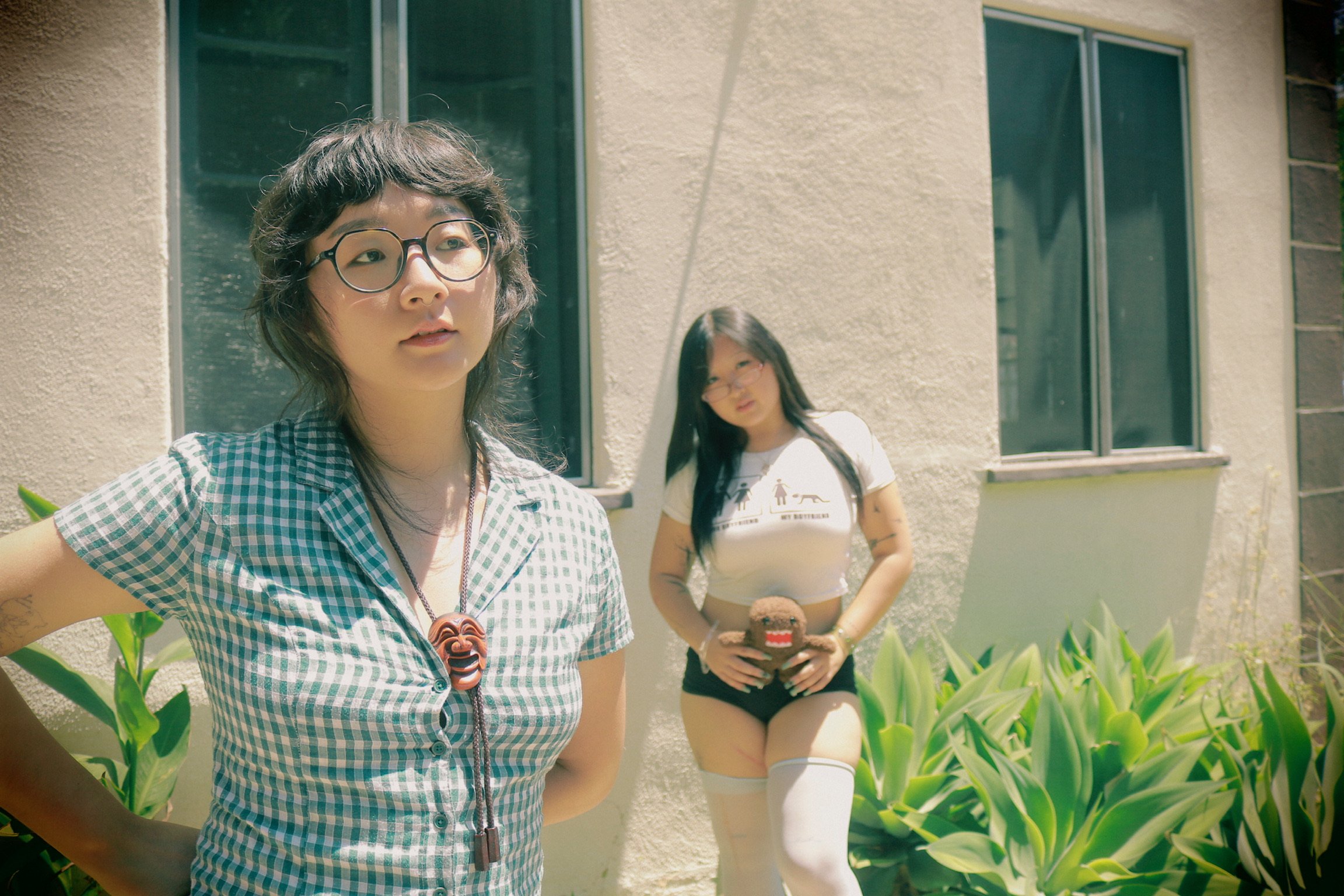
Photo Credit: Danielle Silkes
Some artists write songs. Innuendo builds worlds.
Maybe that's always been true.
Long before “System Overload”, Lizzie and Rachel were already chasing the kinds of things that don't fit neatly into explanations—dreams, strange symbols, memories that change shape over time, and emotions that somehow feel more honest when they're disguised. Inspired by experimental electronic music from the '90s and 2000s, nature, and their experiences as Korean-Americans, the Los Angeles duo have spent years creating music that feels less like storytelling and more like stepping inside someone's subconscious.
But beneath all the imagery and layered sounds, their intention remains surprisingly simple.
“We build these worlds to process our current realities and our fantasies,” they write. “Ultimately, we want to connect more strongly with ourselves and whoever resonates with our projects.”
Connection has always been there. The destination, however, has changed.
Looking back, they see a throughline running across everything they've created. Themes of death and rebirth, self-awareness, and transformation still live inside their music. What has shifted is where those thoughts are directed. Earlier songs often spoke to specific people, rooted in personal experiences and relationships. Today, their perspective feels much larger.
“Lizzie used to talk to her exes in our songs,” they explain. “Now we're speaking into the universe.”
It's a sentence that feels almost impossible to separate from “System Overload”. The record itself exists somewhere between memory and imagination, where characters emerge, symbols replace explanations, and emotions become landscapes rather than conversations. Songs don't necessarily reveal themselves in a straight line. They unfold the way dreams do—through fragments.
That transition didn't come naturally.
For years, Innuendo worked within more familiar structures, writing songs with conversational lyrics and recognizable forms. Moving into the world of “System Overload” meant learning how to trust something less tangible.
“Shifting our sound felt foreign at first,” they admit. “We were used to making songs with more traditional song structures. “System Overload” is more conceptual. We're inventing characters and worlds.”
More than anything, the album became an exercise in letting go.
“It took us a while to fully believe in our new sound, to not play it safe anymore. We let the music-making process define what the sound was going to be, rather than going in with a clear intention.”
That trust in uncertainty feels central to understanding Innuendo. There isn't much interest in overexplaining things.
“You don't explain music,” they say simply. “You feel it in your body.”
It's a philosophy that feels increasingly rare. In a culture obsessed with decoding meaning and finding definitive answers, Innuendo seems more interested in instinct. Meaning arrives later. Feeling comes first.
Even the way they know when a song is finished has nothing to do with technical perfection.
“We usually make a really funny face at each other,” they say. “That's us feeling it in our body.”
That sense of humor appears constantly throughout their responses. Despite the dreamlike atmosphere surrounding their music, Lizzie and Rachel are quick to undermine any illusion of seriousness. Outside of music, they bond over “buffoonery, SpongeBob, and 'would you rather' questions.” Their self-description feels almost like a rejection of the mysterious image listeners might project onto them.
“Our projected image is very introspective and a bit mystique,” they write. “We're actually very stupid in real life.”
Perhaps that's what makes Innuendo so compelling. There is depth without self-importance. Their music carries weight, but they don't seem interested in carrying it around with them.
That freedom extends to how they navigate visibility.
While many artists talk about industry expectations, Innuendo's biggest challenge has been something quieter.
“We're not really pressured by the industry,” they explain. “The biggest hurdle has been getting over being visible to people who have preconceived notions about us.”
Instead, they've found support in unexpected places.
“Our biggest support comes from strangers on the internet who take us for what we are.”
That sentence feels strangely beautiful. There is something comforting about being understood by people who don't know you. People who aren't attached to older versions of yourself. People who simply arrive without expectations.
Perhaps that's why “System Overload” feels so unconcerned with belonging anywhere.
The transformation at the center of the album isn't really about sound. It's about permission.
“Who we want to talk to and who we want approval from has totally changed,” they write. “We don't care about being in any specific scene anymore. What really matters now is that we are as true to ourselves as possible.”
Then they say something that almost reads like a mission statement.
“There are no cells in our bodies that need permission anymore.”
Not from scenes. Not from expectations. Not from anyone. If “System Overload” is about transformation, then perhaps this is what transformed. Dreams, naturally, play their own role in all of this.
Long fascinated by the subconscious, the duo have spent years discussing dreams and trying to understand what strange images might be trying to communicate. They're fascinated by symbols, especially the random details that feel absurd and deeply familiar at the same time.
“We've always talked about our dreams, trying to interpret what our brains want us to know.”
But even then, they resist making things too literal.
“It's more fun to write music about all your missing shoes rather than your fucked up path.”
That's the thing about Innuendo.
They're less interested in answers than images.
Less interested in explanations than feelings.
Even the line “We see what we wanna see” from “BHB” feels less like a conclusion and more like an invitation. Looking back, they describe it as “a manifestation of our new identity.”
“There are a lot of ways to interpret that line,” they explain. “But ultimately it tells us that we're steering the Nebuchadnezzar in our lives. We create our own realities.”
Reality itself becomes fluid throughout “System Overload”. Memory, dreams, emotion, and imagination stop feeling like separate things. Everything blends together until the distinction no longer matters.
Growth, too, requires knowing when to let things go.
On “Garden,” the lyric “I'll cut you off so I can grow then” isn't tied to one specific realization. Instead, it reflects something more universal.
“Sometimes you get to a point where you have to cut off the dead weight,” they explain. “Or you'll be stuck in a cycle that controls you and prevents you from reaching your highest potential.”
Their conclusion is simple.
“Water what serves you.”
And if Innuendo disappeared tomorrow, leaving only “System Overload” behind, what would they want people to understand?
“That we had fun,” they write. “And we're not sorry about it.”
Maybe that's why the album ends with “Soft Return,” a song that feels more accepting than conclusive. No grand answers. No final revelations. Just a quiet acknowledgment that everything changes.
Impermanence.
Not an ending.
Just another transformation.
Because even now, they're already moving toward whatever comes next.
“The train isn't stopping,” they say. “We're working on a new project as we speak.”
And after spending an entire record embracing new identities, creating realities, and building strange worlds from dreams and intuition, their next chapter arrives in a sentence that somehow feels perfectly Innuendo.
“We're softening our edges.”
“It's time to get creamy.”