From Hiatus to Horizon: Akio's Next Chapter Begins
By. Alicia Zamora
Akio Is Learning to Sit With Himself Again After the Silence
In an exclusive interview with Alicia’s Studio, we sit down with artist Akio, a Hawaii-born, Los Angeles based musician whose return to releasing music feels less like a comeback and more like a quiet confrontation with himself. After stepping away from releasing for years, Akio is not returning with a reinvention or a rebrand, but with something more fragile and harder to define: honesty that is still in progress.
His music does not try to resolve anything. Instead, it sits inside the exact moment most people try to escape from. Doubt that repeats itself. Confidence that disappears and returns without warning. The strange in-between space where an artist is no longer who they were, but not yet certain who they are becoming.
What makes Akio’s work compelling is not control over that space, but how openly he admits he is still learning how to exist inside it.
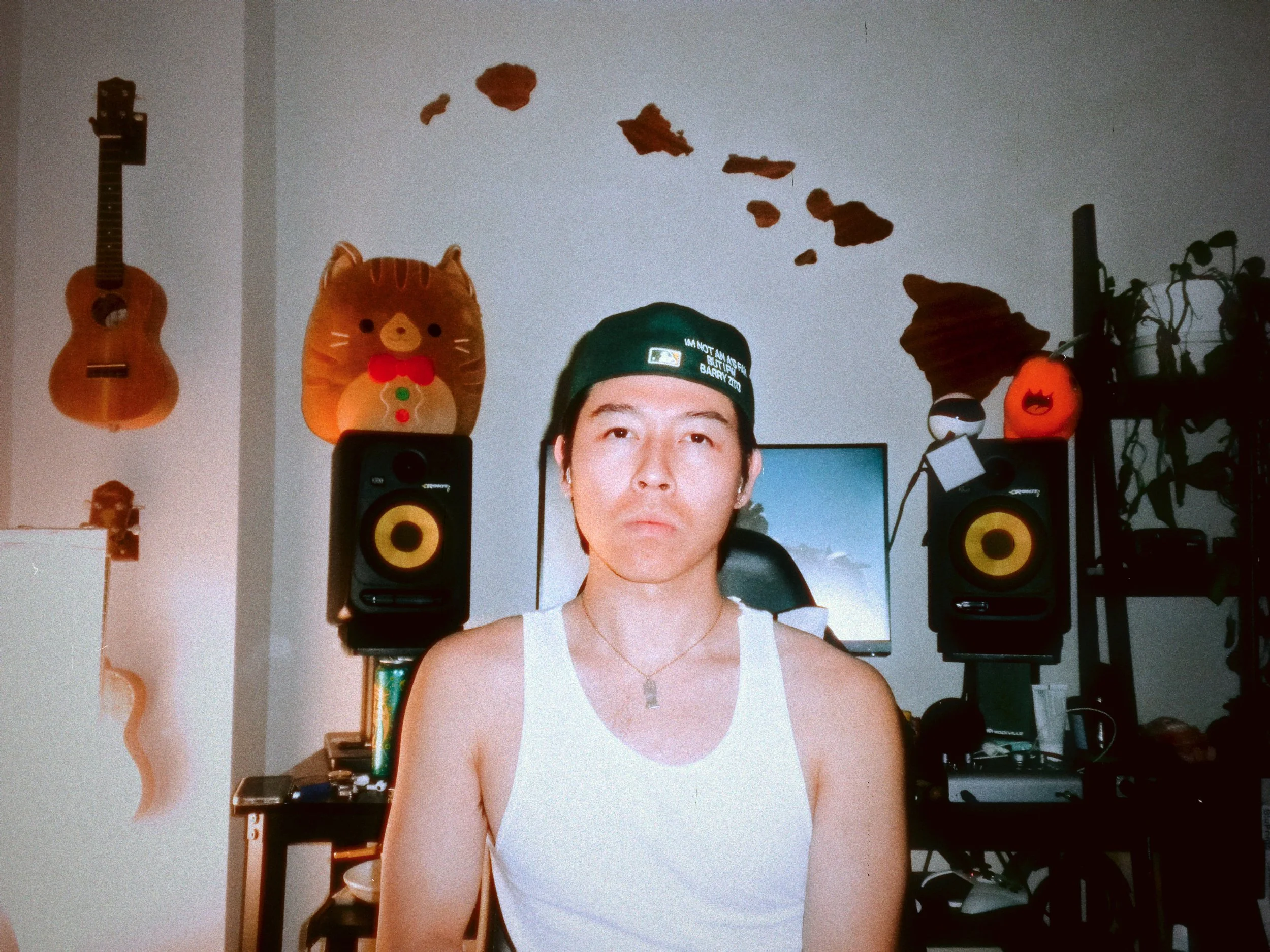
Akio’s hiatus from releasing music did not begin with a decision. There was no announcement, no clean break. It started with hesitation that slowly stretched into years.
“I was really in my head about the music I was making and didn’t feel like any of it was good enough to put out,” he says. “I kept making music, but nothing ever felt ready.”
That sentence carries the tone of someone who never truly stopped creating, but slowly lost the ability to recognize when something was finished. The work continued privately, but the relationship to it changed. Music became something to revise endlessly rather than release.
Over time, that loop created distance not only from releasing, but from trust in his own judgment.
“I was just making things and never felt like I could say, this is done,” he explains. “So it turned into not releasing anything for a long time.”
What he describes is not burnout in the traditional sense. It is something quieter. A slow erosion of certainty.
What It Felt Like to Come Back to Releasing
Returning to music after that period was not immediate confidence. It was hesitation mixed with curiosity, and a kind of relearning what it means to share something again.
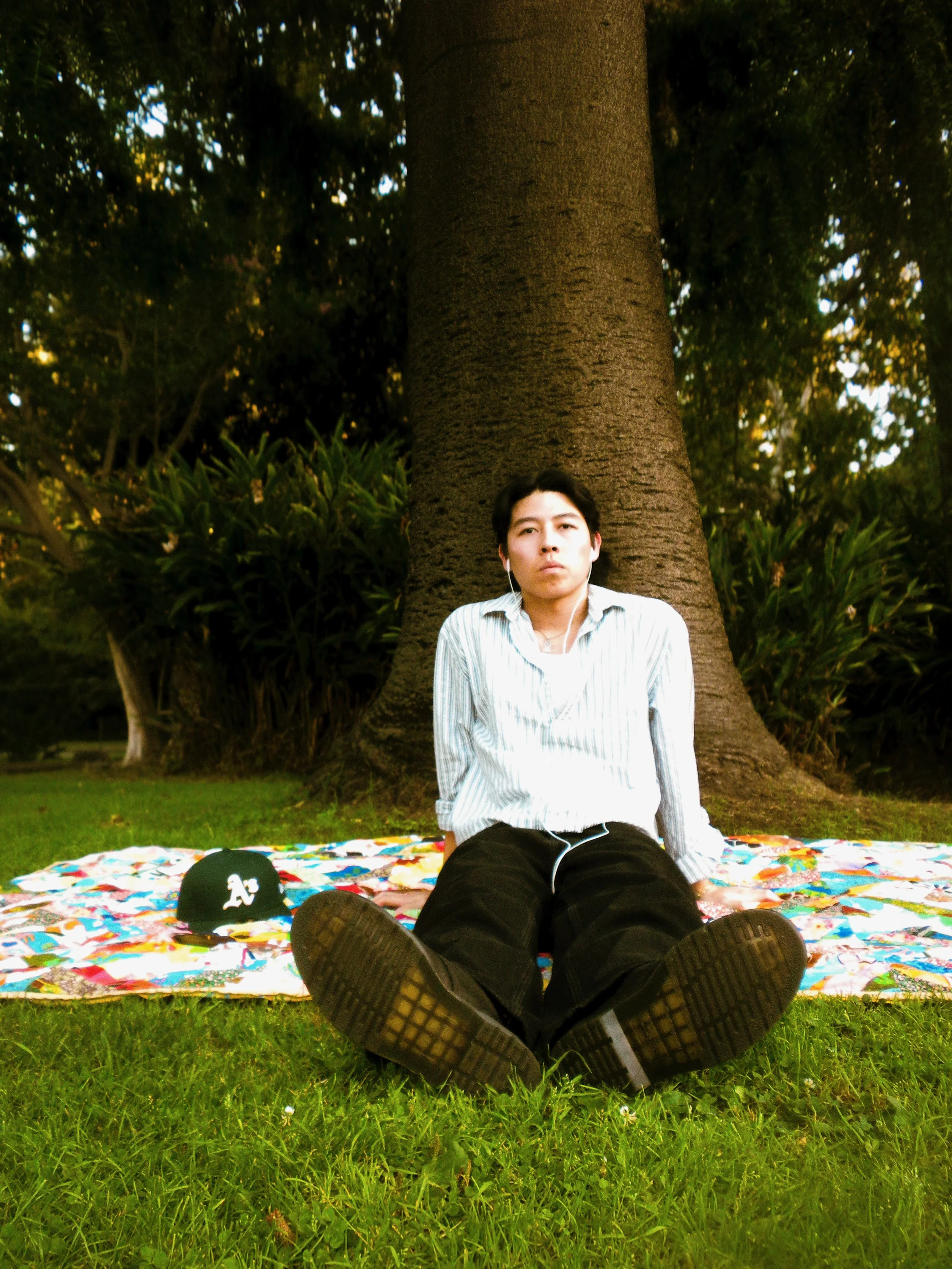
“It is scary, but it is also kind of fun,” Akio says. “When you don’t put stuff out for a while, you forget how good it feels to release something and hear people respond to it.”
That response, even in small amounts, becomes part of the motivation again. Not validation in a grand sense, but a reminder that the music does not disappear when it leaves his hands.
Still, there is vulnerability in reentering that space. The same questions that paused him before are still present, just quieter now.
“What if people don’t really care? What if no one gives a fuck about what I’m putting out?” he admits. Then he pauses before continuing. “But at some point I was like, it doesn’t really matter. I’m making all this music for myself anyway.”
That shift is not framed as confidence. It is acceptance without certainty.
A major turning point in Akio’s story is not creative but physical. During his time away, he lost nearly two years of unreleased music after his computer and hard drive were stolen.
“I lost all the music I made in 2023 and the end of 2022,” he says. “They took everything.”
There is a pause in how he talks about it, not dramatic, but reflective. The kind of loss that does not feel immediate at first, but expands later when you realize what will never come back.
Only one piece survived in any usable form.
“I only had a demo of ‘easier,’” he says. “That was basically the only song close to finished from that time.”
That accidental survival would end up shaping one of his most defining releases, not because it was planned, but because it was the only thing left to continue from.
“I was like, I might as well put it out.”
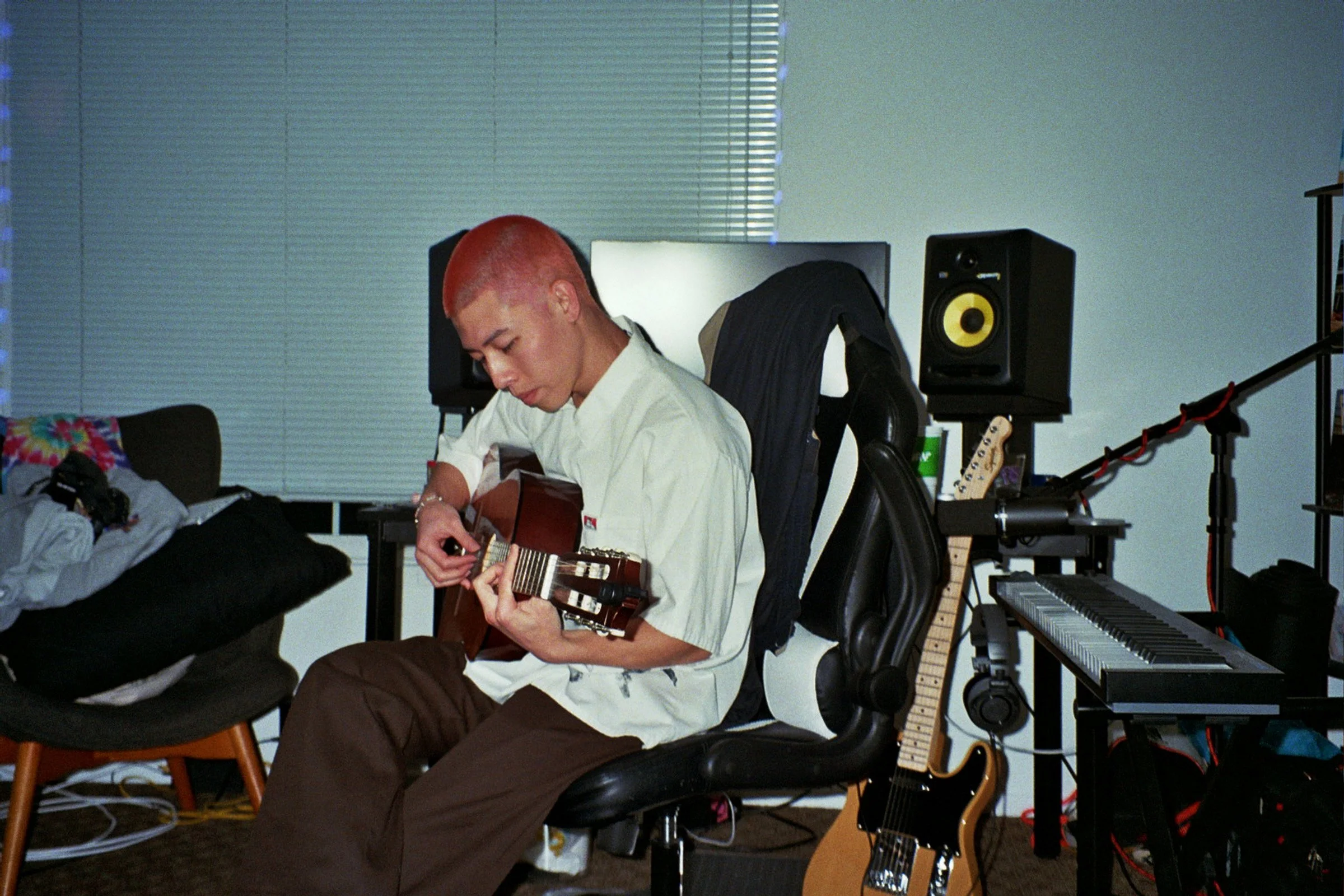
“easier” and the Sound of Emotional Contradiction
“easier” exists in a space Akio himself describes as unintentional honesty. It is not a song that began with a clear emotional thesis. It revealed itself during the process.
“I made the beat pretty quickly and thought I’ll just get a little idea down,” he says. “Then I realized I was just talking about what I was going through.”
What makes the song emotionally layered is not complexity in production, but contradiction in tone. Something sonically light holding something emotionally heavy underneath it.
“It’s a happy, summery beat, but the lyrics are depressing,” he says. “I thought maybe people wouldn’t notice. Or wouldn’t care. But I think that contrast is what makes it interesting.”
There is something revealing in that assumption. The idea that emotional depth might go unnoticed unless pointed out. Yet the reaction to the song suggests otherwise. Listeners felt it without needing explanation.
That gap between intention and reception becomes part of the meaning itself.
One of the most consistent patterns in Akio’s creative process is repetition. Not just in songwriting, but in how he approaches finishing anything at all.
“My process is me sitting in my room doing the same line over and over again,” he says. “Then I’m like, nah that was bad, and I do it again.”
He describes it with humor, but also familiarity. A cycle that once felt necessary but now feels limiting.
“There are times where I’ll mix something like 30 times,” he says. “And I’m like, bro, it is not changing anything. No one can tell.”
What he is learning now is not how to make things perfect, but how to recognize when effort stops improving the work and starts exhausting it.
“If it sounds good, that is good enough for now,” he says. “I am trying not to overdo it anymore.”
Who He Was Then, and Who He Is Still Learning to Be
A recurring theme in Akio’s reflection is distance from his past self, not as rejection, but as observation.
“I’m showing more of who I used to be,” he says. “Especially in relationships. Not in a good way, but that was how I was at that time.”
He does not frame his past actions with judgment. Instead, he treats them as documentation of a version of himself that existed under different conditions.
That approach extends to how he now understands growth itself.
“I still have the same questions I had back then,” he says. “You just find different answers, and those answers change.”
Nothing is final. Even clarity is temporary.
What defines Akio now is not a fixed artistic identity, but a willingness to stay in uncertainty without rushing to resolve it.
“I just want it to be fun,” he says about what comes next. “I’m not trying to force everything to be perfect or cohesive right now.”
That simplicity is not avoidance. It is recalibration. A shift away from pressure toward continuity.
Because for Akio, the goal is no longer to figure everything out before moving forward. It is to keep moving while things are still unclear.
And in that movement, something quieter begins to take shape. Not resolution. Not certainty. But presence.