Sunburnkids Confront the Unspoken on Elephant in the Room
By. Alicia Zamora
There’s something quietly disarming about the way Sunburnkids approaches storytelling. On his debut album Elephant in the Room, the artist doesn’t just revisit the past; he reconstructs it, piece by piece, through sound, memory, and collaboration. The result is a project that feels less like a traditional album and more like an open archive of unresolved emotions.
The title itself sets the tone. Borrowed from the familiar idiom, Elephant in the Room signals what the project is ultimately about: the things we avoid, the conversations we postpone, the truths that linger just beneath the surface. Rather than circling those ideas, Sunburnkids moves directly toward them.
But what makes the album stand out isn’t just its subject matter—it’s how it’s built.
In an unexpected but deeply intentional move, Sunburnkids brings children into the center of the project—not as background elements, but as collaborators. Through art sessions, shared conversations, and creative workshops, the artist invites them to interpret the album’s themes in their own way.
Their drawings become cover art. Their voices become part of the music. Their presence becomes part of the narrative.
At a listening exhibition held at Layer Studio 7 in Yongsan, those contributions were displayed alongside the album itself—blurring the line between music, visual art, and lived experience. It’s a gesture that reframes authorship entirely.
“Sunburnkids tells them that they are both the authors and the protagonists of this album.”
That philosophy runs through every part of the project.
Sunburnkids handles every aspect of the album’s creation—writing, composing, producing, directing, even visual execution. It’s not just a matter of control, but of necessity.
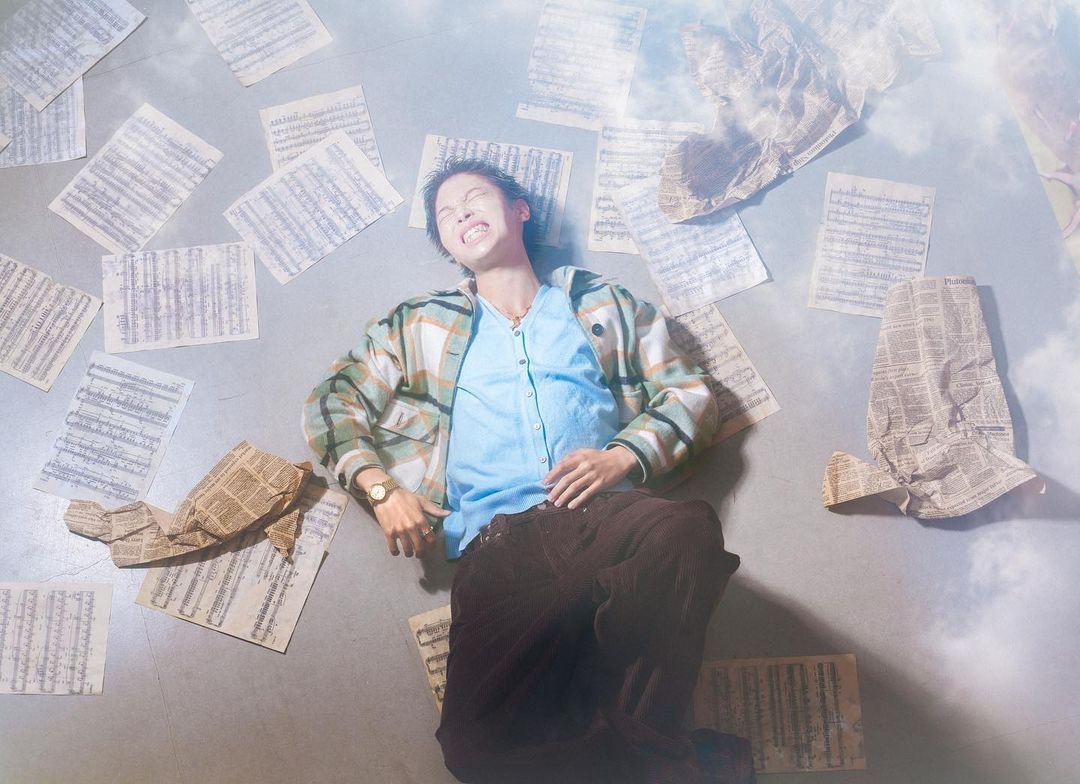
“Because no one can truly understand my life as deeply as I do.”
That mindset shapes the album’s tone. Nothing feels filtered or outsourced. Each track carries a sense of direct authorship, as if it exists exactly as intended—unpolished where it needs to be, detailed where it matters most.
Track by Track: A Narrative in Fragments
The album unfolds like a series of memories—nonlinear, emotional, and deeply personal.
“Babel Top” opens the project with weight. It plays like a coming-of-age entry point, navigating morality, peer pressure, and the tension between right and wrong. There’s a literary quality to it, as if the song is documenting rather than performing.
“Crook” moves deeper inward. It captures the loss of innocence with a quiet intensity, pairing introspective lyrics with an almost ethereal soundscape. The emotional scars it references aren’t dramatized—they’re simply present.
On “Red Cheek Boys,” the narrative sharpens. Featuring Sunburnkids’ younger brother, the track feels especially personal, grounded in real experience. It’s a direct confrontation with childhood—temptation, rebellion, and the internal conflict that follows.
“Fisher Man” shifts the tone slightly. Its collaborative nature, featuring children’s voices and perspectives, adds a sense of warmth, even as it remains rooted in reflection. It’s one of the album’s most distinctive moments, not just sonically, but conceptually.
With “Time,” the project leans into self-awareness. The track reads as both warning and reflection, shaped by lessons learned and mistakes acknowledged. There’s a sense of acceptance here—of past actions, and the consequences that follow.
“The Fence” introduces a sonic shift. Beginning with a mechanical, almost robotic tone, it builds tension before breaking into something darker and more chaotic. The contrast feels intentional—mirroring the feeling of being trapped, then reacting against it.
On “Erlkönig,” the album expands outward. Piano-driven and cinematic, the track carries urgency, as if time itself is part of the narrative. It’s experimental, but controlled—pushing boundaries without losing focus.
“Acne Scar” returns to reflection, tracing a path from youthful missteps to self-awareness. It’s one of the album’s most relatable moments, grounded in growth rather than regret.
“Nomad” slows everything down. There’s a calmness here—a sense of acceptance that contrasts with earlier tension. It feels like a moment of pause, allowing the listener to sit with everything that’s come before.
“Playground” revisits childhood from a different angle. It’s less about innocence, more about what remains after it’s gone. The track carries a quiet emotional weight, shaped by memory and introspection.
Closing with “Agustin,” the album broadens its scope one final time. Sonically dynamic and emotionally layered, it feels like a culmination—not a resolution, but a continuation.
What makes Elephant in the Room resonate isn’t just its subject matter; it’s the intention.
Sunburnkids doesn’t offer clean conclusions or easy answers. Instead, the album creates space—for discomfort, for reflection, for acknowledgment. It invites listeners to confront their own unspoken experiences, not by force, but by recognition.
There’s also something inherently hopeful in its construction. By involving children—not just as contributors, but as co-creators—the project shifts its focus forward. It becomes not only about processing the past, but about shaping how it’s understood by the next generation.
At its core, Elephant in the Room is about honesty, the kind that isn’t always easy to articulate, but necessary to confront.
It’s deeply personal, but never isolating. Specific, yet widely relatable.
And in that balance, Sunburnkids delivers a debut that feels less like an introduction and more like a statement.
Not just of who he is but of what he’s willing to face.