Justin Park (S1NE) on Reinvention, Emotional Writing, and Building a Disciplined Creative Life
By. Alicia Zamora
Meet Justin Park—also known as S1NE—in this exclusive interview for Alicia’s Studio, where the conversation traces his early beginnings in music, the emotional evolution behind his latest EP April’s Fool, and the structure he’s building around releasing music consistently in real time.
What begins as a simple introduction quickly turns into a layered reflection on how music found him before he ever fully chose it. There’s a sense that his path wasn’t built on one defining moment, but on accumulation—early performance experiences, trial and error, and eventually learning how to turn emotion into a repeatable creative process.
He describes music not as a sudden career decision, but something that started as play and slowly became identity.
“It was just something I did for fun… and it still is,” he says.
Justin reflects on growing up constantly surrounded by music—singing loudly as a kid, experimenting with instruments, and eventually finding structure through church performance and praise team work.
He describes those early environments as unintentionally formative, giving him his first real sense of stage presence and emotional expression through sound.
Even with formal training in piano, guitar, and cello, nothing fully stuck in a traditional sense. What stayed was performance itself—the act of singing, expressing, and connecting.
Over time, that evolved into songwriting, shaped further by being surrounded by a creative city like Toronto, where meeting like-minded artists felt natural rather than forced.
April’s Fool: Three Versions of One Emotion
His latest EP April’s Fool becomes the emotional center of the conversation. Rather than a single snapshot in time, it represents years of evolution—written, rewritten, and reshaped across different stages of his life.
Originally, the song existed in a much more idealistic emotional space. Later versions shifted into conflict and tension. The final version, however, lands in something more reflective: accountability, regret, and the search for resolution.
It’s less about a single story and more about how perspective changes over time.
The core idea stayed the same throughout: love, misalignment, and the emotional aftermath of caring too deeply without clarity.
What changed was where he placed himself inside that story.
Justin’s writing process is deeply collaborative, often starting in late-night studio sessions that stretch until early morning. Working closely with his producer, Dice, the process is built around immediate creation—sound first, then emotion, then structure.
Sessions often begin with a simple question: what’s the feeling today?
From there, production and writing happen simultaneously, with melodies forming in real time before lyrics fully solidify.
He describes the early stages as intentionally imperfect—scratch vocals, fragmented ideas, and raw melodies that later evolve into structured songs.
That openness allows the music to stay fluid rather than overly engineered.
When discussing his sound, Justin resists clean categorization. Earlier releases leaned into brighter pop textures, while his newer work moves into darker, more atmospheric R&B spaces.
He describes his music as existing in a grey area—shaped by mood rather than genre rules.
There are clear influences in his writing and production approach, including artists like Giveon, 6lack, and emerging creators like Josh Makazo and Daniel Di Angelo, but he doesn’t see his sound as fixed within any single lane.
Instead, he gravitates toward R&B because it allows space for emotional pacing and lyrical depth without strict structural repetition.
He also pushes back on labeling, especially when it comes to cultural categorization, preferring to be understood through sound rather than identity shorthand.
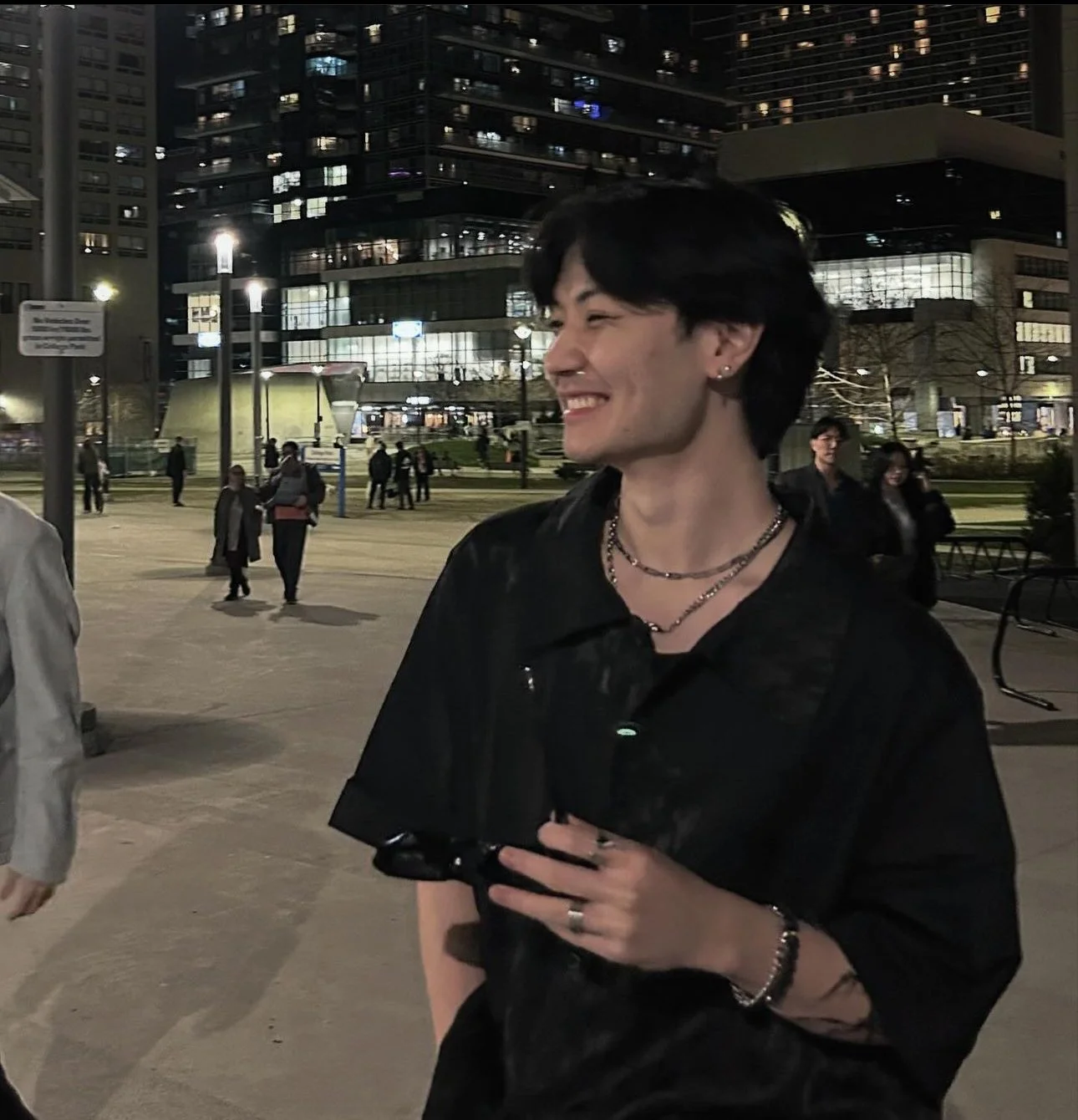
A large portion of Justin’s songwriting comes from lived experience, but not always his own. Sometimes stories are borrowed, overheard, or reshaped from conversations with friends.
One of his tracks, Hate Me Too, came directly from a situation involving someone close to him, while other songs are built from emotional interpretation rather than direct autobiography.
April’s Fool, however, remains the most personal—something he frames as closest to his real emotional experience across its different versions.
There’s a consistent tension in his writing between observation and participation—between what he lives and what he transforms into narrative.
In the present moment, Justin is focused less on reinvention and more on structure. He is actively working on releasing music consistently, aiming for a single every month while balancing the creative and logistical sides of independent artistry.
That includes not just writing and recording, but also managing distribution timelines, artwork, and rollout planning well in advance.
It’s a system that requires discipline more than inspiration, but he frames it as a necessary shift for sustainability.
At the same time, he continues developing multiple projects in parallel, keeping his output intentionally active rather than spaced out over long gaps.
Growth, Validation, and External Connection
As his audience grows, Justin reflects on how recognition has changed his relationship to music—but not his sense of identity.
He doesn’t describe himself as fully “arrived,” but rather in a transitional space where external feedback is beginning to validate internal work.
Moments like friends sharing his music or family members expressing pride have become meaningful checkpoints in his journey, reinforcing why he continues to create.
That connection—between personal expression and external impact—becomes one of the most grounding parts of his process.
Looking forward, Justin expresses interest in expanding into live performance and future collaborations, though he emphasizes that alignment matters more than opportunity.
He mentions past conversations with artists like Jimmy Brown and the possibility of revisiting collaborations when timing and sound naturally align.
Rather than forcing features, he is focused on building projects that feel cohesive and intentional.
As the interview comes to an end, Justin returns to the idea of consistency—not as pressure, but as structure.
He is actively building a system around his creativity, one release at a time, while continuing to refine his sound and identity as an artist.
What emerges from the conversation is not a finished chapter, but a disciplined unfolding—an artist still evolving, still experimenting, and still learning how to balance emotion with execution in real time.