Jin.K Talks Nocturne to Twilight, Finding His Sound, and Letting Go
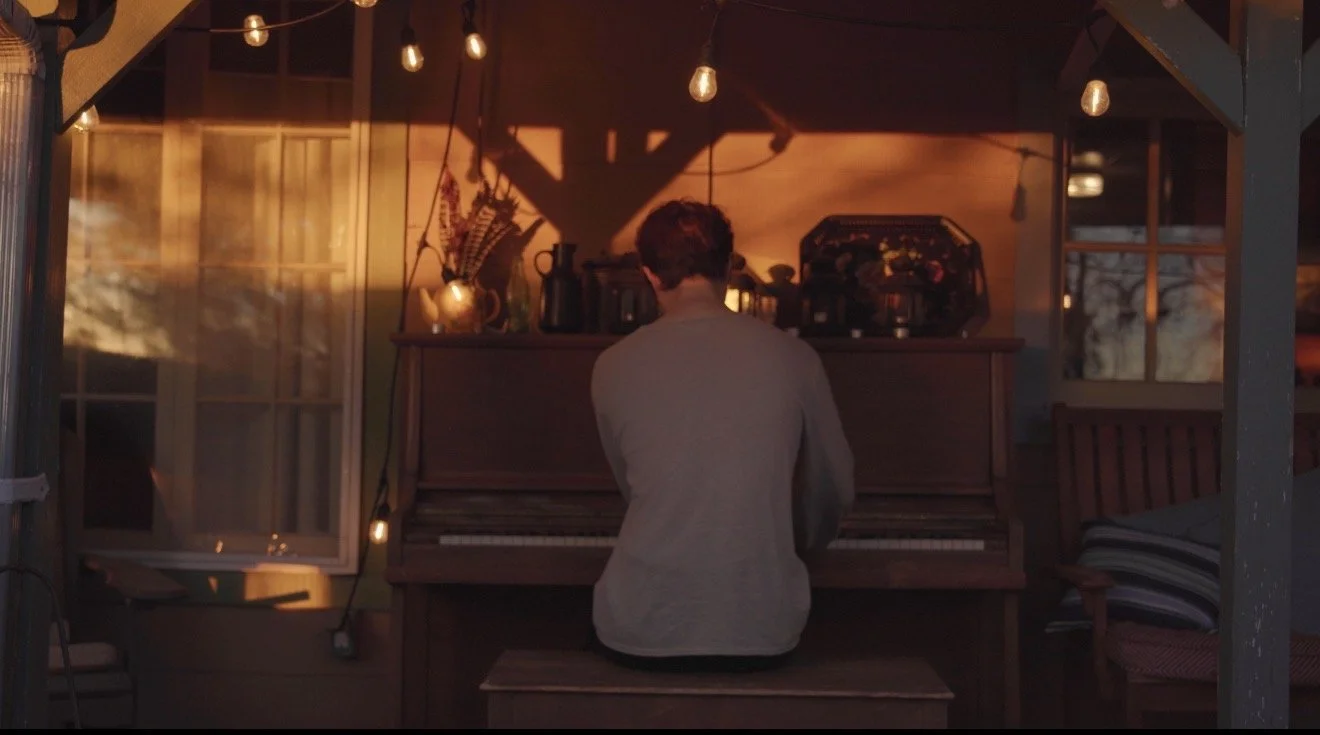
For Jin.K, music has always been closely tied to memory. The producer and artist describes his work simply: “I try to turn emotions and memories into sound.” Piano has been at the center of that process for years, but on his first full-length album, Nocturne to Twilight, he gives himself room to build much more around it. Across eight songs, different sounds, voices, and textures create what he describes as individual worlds.
“More than belonging to one genre, I want each song to feel like a scene you can step into,” he says.
It took three years to make Nocturne to Twilight, which means the person who started the album is not exactly the same person finishing it. Some songs bring Jin.K back to specific moments almost immediately. He remembers what he was thinking, who was around him and what his life looked like when he made them.
Still, he doesn’t listen to those earlier versions of himself with much distance.
“I don’t feel disconnected from that person,” he says. “I think all of those different versions of me still exist somewhere inside me.”
That is part of what makes the album feel personal to him. Rather than treating the record as a straightforward look back, Jin.K sees it as a collection of the people he has been along the way.
“That’s why the album feels less like looking at my past and more like looking at a record of how I became who I am now.”
Making an album over three years naturally means living with many unfinished thoughts. For Jin.K, some of those thoughts were tied to things he had been holding onto for longer than he realized. Parts of him wanted answers. Why did something happen? What did it mean? Was it something he needed to move on from, or something he needed to understand first?
“Definitely,” he says when asked if there was a version of himself he had to make peace with while making the record. “There were versions of myself that held onto things for too long, or wanted answers to things that probably didn’t have answers.”
At the time, he thought he needed to understand everything before he could move forward. Making the album changed that.
“I think this album made me realize that sometimes you don’t need an answer. You just have to accept that something happened, that it changed you, and keep going.”
That shift is reflected in the album’s title.
When he began working on Nocturne to Twilight, he was spending a lot of time in his own head. The earlier part of the record came from that place. Nocturne represented that darker, more inward period, while Twilight gave him a way to describe what came after.
“Twilight felt different to me,” he explains. “It isn’t completely bright yet, but you know the night is ending.”
He didn’t want the album to suddenly arrive at a clean resolution. The transition mattered more than the destination.
“I didn’t want the album to suddenly go from darkness to happiness,” he says. “I wanted it to feel like that gradual moment when light starts coming in and the way you see things begins to change.”
That same feeling comes through when he talks about letting go. He used to think it was something you could decide to do and be finished with.
“Like one day you decide you’re done and you move on,” he says.
He doesn’t see it that way anymore.
“Sometimes you keep holding onto something even after you know you should let it go. And then one day you realize you’re not holding it as tightly anymore.”
For Jin.K, time does some of the work that a decision can’t.
“Maybe the decision starts the process, but time is what actually teaches you how to let go.”
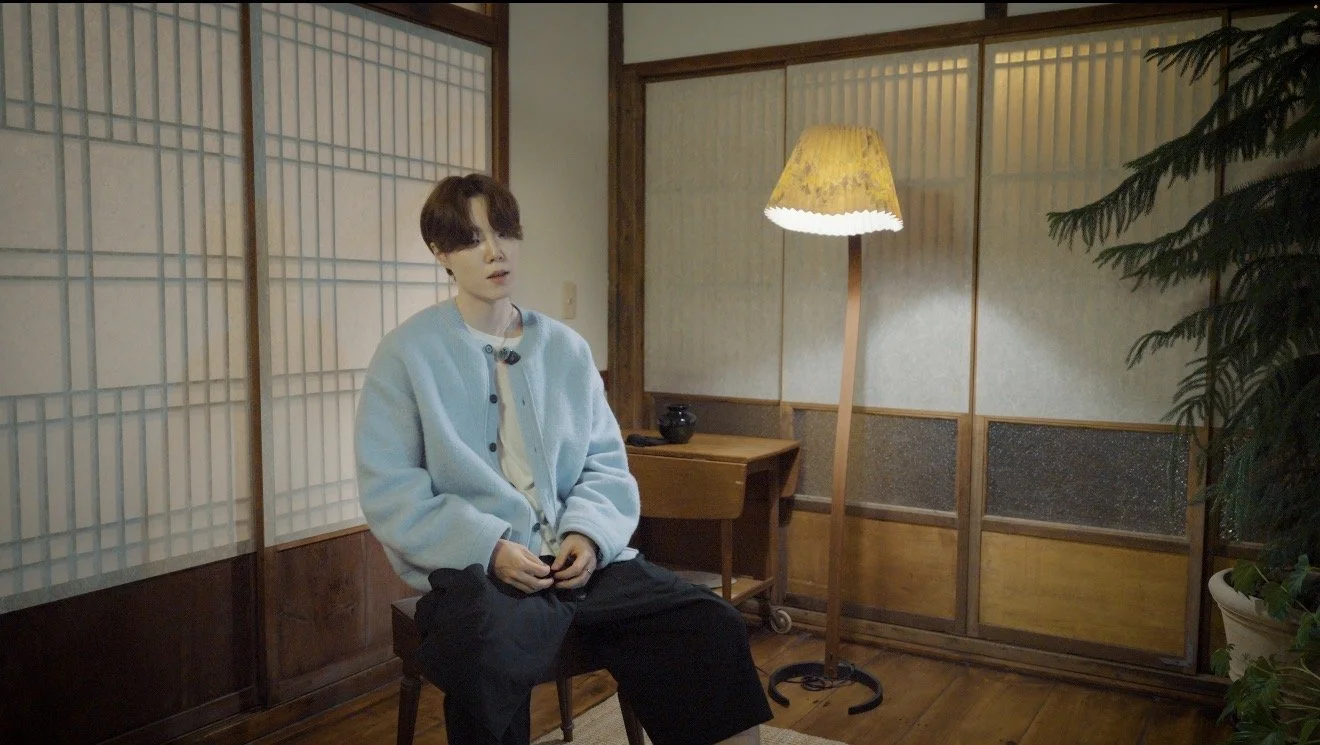
His life still has some uncertainty, and he isn’t trying to hide it. Even after finishing the album, he doesn’t feel like he has completely arrived at some final version of himself. If anything, he seems more comfortable admitting that there isn’t one.
“I think I’m still somewhere around Twilight,” he says.
He doesn’t expect everything to suddenly become clear. He still has things to figure out, but the difference now is how he feels about not having all the answers.
“I’m much more comfortable with not knowing now.”
That may be one of the biggest changes between the person who began Nocturne to Twilight and the person who finished it. Instead of treating uncertainty as something that needs to be solved, Jin.K has started to see it as part of the process.
“Maybe Twilight isn’t something I need to escape from,” he says. “Maybe learning to live in that uncertainty is already a kind of light.”
A lot of the album’s emotional weight also comes from relationships, but Jin.K says the record eventually brought his attention back to himself.
“I realized that I spend a lot of time trying to understand myself through other people,” he says.
He thought about how he loved someone, how someone made him feel, why someone left and why he couldn’t let something go. But eventually, he had to take those people out of the equation.
“When you take all of those people away, you’re still left with yourself.”
That realization became important to the album. Instead of constantly looking outward for explanations, he began paying more attention to the person who remained.
“I think this album taught me to pay more attention to that person—to who I am without needing someone else to explain me.”
Piano has always been central to Jin.K’s music, but the way he approaches the instrument has changed. He doesn’t necessarily sit down knowing exactly what he wants to say. More often, there is a feeling first. The piano gives him a way to find it.
“Usually I already have some kind of feeling, but I don’t necessarily know how to describe it yet,” he says.
He’ll play until he finds a chord or a few notes that suddenly feel like the emotion he’s trying to capture. Once that happens, the rest of the song begins to take shape.
“So I guess I’m not really searching for the feeling,” he says. “I’m searching for the sound that can describe it.” That approach is also connected to how his relationship with piano has changed over time.
“When I was younger, I cared more about what I could play and concentrated on developing the skills,” he says. “Now I care much more about what a few notes can make someone feel.”
If anything, experience has made him more interested in taking things away.
“I actually find myself removing things more often than adding them.”
For Jin.K, technical ability isn’t the point anymore. The goal is finding the right amount of music to communicate something honestly. “Piano has become less about showing what I can do and more about finding the simplest way to say something honestly.”
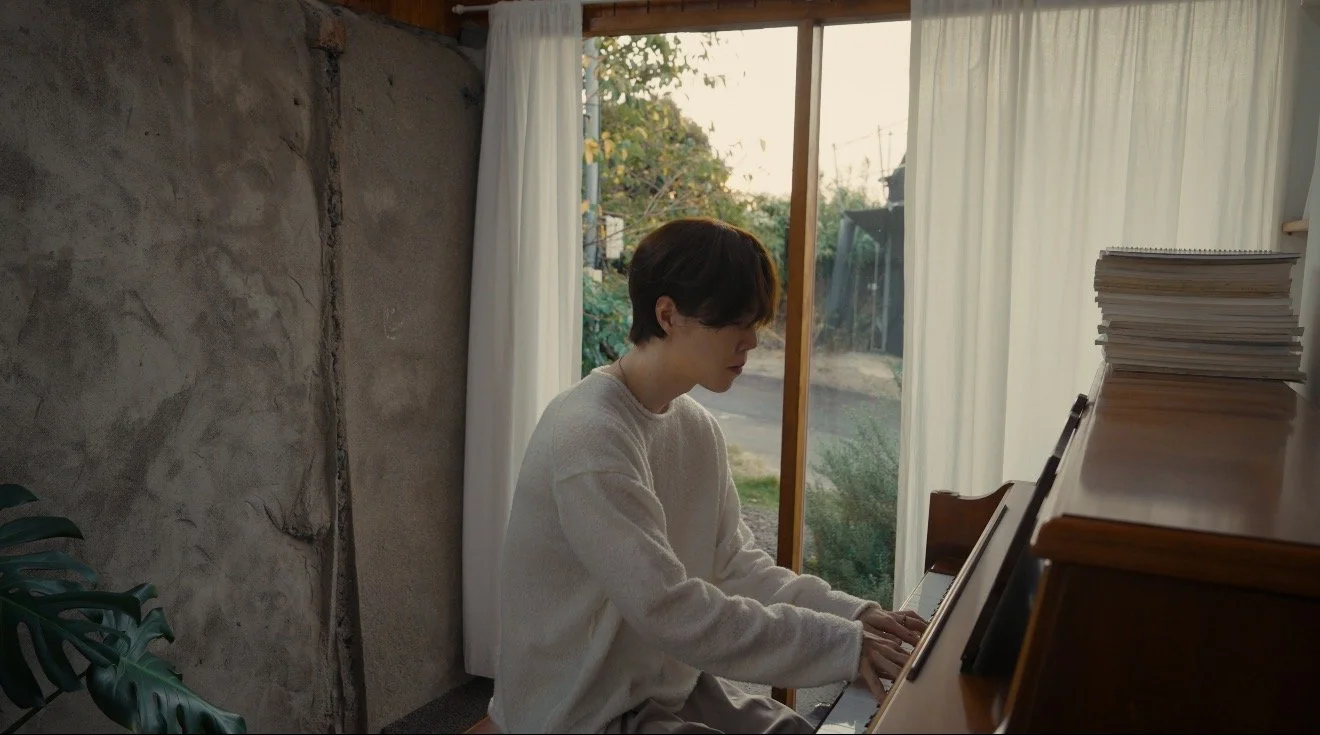
His interest in visual art gives another clue into how he thinks about music. He enjoys going to exhibitions, but he doesn’t immediately reach for the headphones or read the explanation beside a piece. He prefers to look first and decide what he sees for himself.
“I like to spend some time just looking at the work and imagining my own story around it,” he says.
That is also how he wants people to approach his music. He cares about the visual world surrounding the album, but he doesn’t want those visuals to dictate what a song is supposed to mean.
“I never want the visuals I create to become the only ‘correct’ interpretation of the music.”
For Jin.K, part of the appeal of art is that it can mean something completely different to the person experiencing it.
“If someone listens to one of my songs and imagines a place I’ve never been, or remembers a moment from their own life that I’ve never experienced, then in a way, the song has become part of their story too.”
That possibility seems especially important for an album built so heavily around memory.
He thinks about memory often, particularly because of how closely it is tied to his creative process.
“Memory changes every time you return to it,” he says. “Details disappear, and sometimes you’re not even sure if you remember something exactly as it happened.”
Music can work differently.
“You might forget what someone said or what a room looked like, but a song can make your body remember how that moment felt.” That happens to him with his own songs, too. Sometimes he can hear an intro and recognize an emotion before he can place the memory attached to it.
“I’ll hear an intro and immediately feel something familiar, and only a few seconds later remember where I was or what was happening when I wrote it.”
That is one reason the songs still feel so close to him after three years of making them.
“They don’t just document what happened,” he says. “They document how it felt to be me while it was happening.”
It also explains why he doesn’t see the album as a perfect summary of his past. It is more like evidence of what those moments felt like from inside them.
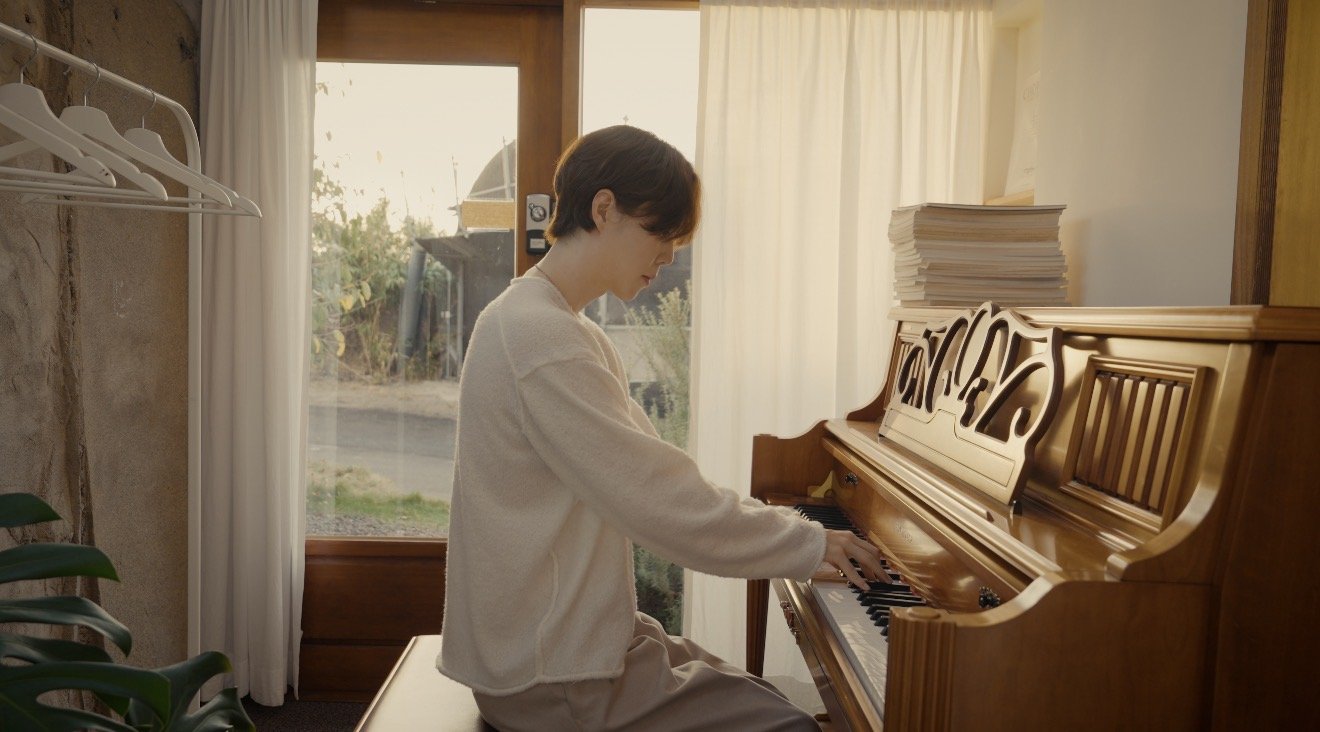
If Jin.K could go back to the person he was when he started making Nocturne to Twilight, he doesn’t think he would give himself much advice.
“Maybe just, ‘Keep going.’”
He wouldn’t want to explain how everything turns out. The uncertainty, mistakes, relationships and changes are part of what eventually became the album.
“If I gave him all the answers, maybe he wouldn’t make the same record.”
That idea comes up again when he talks about what he understands now that he didn’t understand when he began.
“I think I understand now that you don’t have to completely understand an experience for it to mean something.”
Earlier in his life, he was more focused on conclusions. Now he is more comfortable letting certain experiences exist without assigning them a final explanation.
“Maybe understanding isn’t always finding an answer. Sometimes it’s being able to live without one.”
That may be the clearest way to understand where Nocturne to Twilight leaves Jin.K. The album doesn’t tie everything up, and he isn’t trying to pretend that it does.
The final note is deliberately left somewhere between resolution and uncertainty.
“I think it’s somewhere between an ending and a beginning,” he says.
He doesn’t see the end of the record as proof that he has figured himself out. Instead, it is an opportunity to look back and acknowledge the person who made it.
“This was me. This is what I felt. This is where I was.”
There is still light coming in. Jin.K just doesn’t know yet what it will reveal.
“I think I like leaving it there.”